Muscles Worked
Primary Muscles
- Quadriceps
- Deltoids (Shoulders)
- Gluteus Maximus
- Triceps Brachii
Secondary Muscles
- Core Stabilizers
- Hamstrings
- Upper Back (Traps)
- Calves
- Cardiovascular System
How to Perform
-
1
Starting Position: Clean the barbell to front rack position—bar resting on front delts, elbows high, full grip on the bar. Stand with feet shoulder-width apart, core braced. Take a deep breath to create intra-abdominal pressure.
-
2
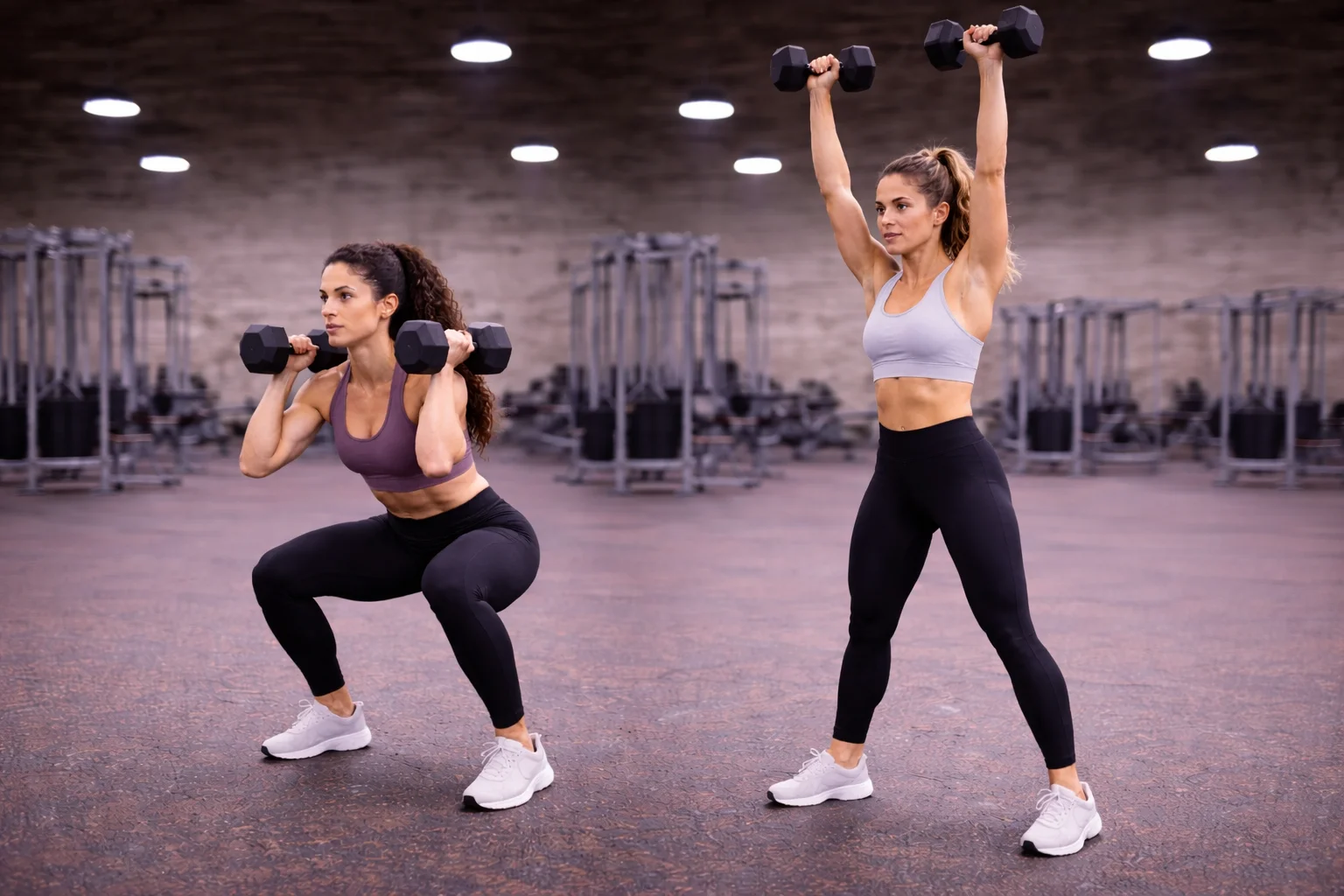
Descend Into Front Squat: Send hips back and down simultaneously while keeping elbows high and torso upright. Descend until hip crease drops below knee level (below parallel). Knees track over toes, weight stays on mid-foot to heels. Maintain that front rack position—don't let the bar roll forward.
-
3
Explosive Drive Up: Drive through your heels and explode out of the bottom position. Generate maximum power from your legs. As you reach full hip and knee extension, use that upward momentum to help press the bar overhead. The squat and press should flow together seamlessly—don't pause at the top of the squat.
-
4
Lock Out Overhead: Press the bar to full lockout overhead, arms fully extended, shoulders actively shrugged up. Bar should be slightly behind your head, stacked over your midfoot. Squeeze your glutes and brace your core to maintain a stable torso. Exhale at lockout.
-
5
Return to Front Rack: Lower the bar back to front rack position with control. Absorb the weight by slightly bending your knees. Re-set your breath and core tension, then immediately flow into the next rep. This is where the movement becomes truly challenging—controlling that eccentric and maintaining position.
Common Mistakes
Pausing at the Top of the Squat
Breaking the movement into separate squat and press portions defeats the purpose. The magic of thrusters is using that explosive hip drive to help launch the bar overhead. Flow smoothly from squat to press without hesitation.
Dropping Elbows in Front Rack
Letting your elbows drop causes the bar to roll forward, dumping weight onto your wrists and compromising position. Keep those elbows high throughout the squat—parallel to the ground if possible. This maintains proper bar path and protects your shoulders.
Not Squatting Deep Enough
Quarter-squatting wastes the movement's potential. You need full depth to generate maximum upward power. Break parallel on every rep—hip crease below knee. Shallow squats = weak lockouts and wasted energy.
Pressing Forward Instead of Up
Pressing the bar forward puts dangerous stress on your shoulders and makes lockout nearly impossible. Drive straight up, bringing the bar slightly back so it finishes over your center of mass. Think: press up and slightly back, not forward.
Pro Tips
-
Master the Front Rack Position First
Spend time working on your front rack mobility—tight wrists, shoulders, or lats will sabotage your thruster. Practice front squats separately until you can hold the bar comfortably with elbows high throughout the full range.
-
Use Your Legs, Not Just Your Arms
Think "jump the bar up" rather than "press the bar up." Your legs are far stronger than your shoulders. That explosive hip extension should do 70% of the work getting the bar overhead. Save your shoulders for stabilizing at lockout.
-
Find Your Breathing Rhythm Early
Establish a consistent breathing pattern before fatigue sets in. Most athletes breathe in on the way down, hold briefly at the bottom, then exhale powerfully as they drive up and press. Experiment to find what works for your physiology.
-
Start Lighter Than You Think
Thrusters are deceptively difficult, especially in high-rep sets. That weight that feels light for 5 reps will feel impossibly heavy by rep 15. Start conservative and focus on perfect mechanics before adding load.
Variations
-
Dumbbell Thruster
Hold dumbbells at shoulder level and perform the same movement. Easier on the wrists and allows for independent arm movement, but requires more stability.
-
Single-Arm Dumbbell Thruster
Ultimate core challenge. Hold one dumbbell at shoulder, squat deep, then drive overhead. Extremely demanding on your obliques and stabilizers.
-
Kettlebell Thruster
Hold kettlebells in rack position (resting on forearms). The awkward balance point makes this version especially challenging for your shoulders and core.
Alternative Exercises
- Front Squat - Builds the squat portion strength
- Overhead Press - Develops pressing strength
- Wall Ball - Similar movement pattern, different tool
- Clean and Press - Olympic lifting alternative
Tip of the Day PRO
Focus on quality over weight. Perfect technique with moderate weight activates more muscle than heavy weight with poor form.

Track Your Thruster Progress
Log every set, track your personal records, and watch your strength grow with replogr. The offline workout tracker built for serious lifters.
Download replogr.