Single-Arm Cable Curl
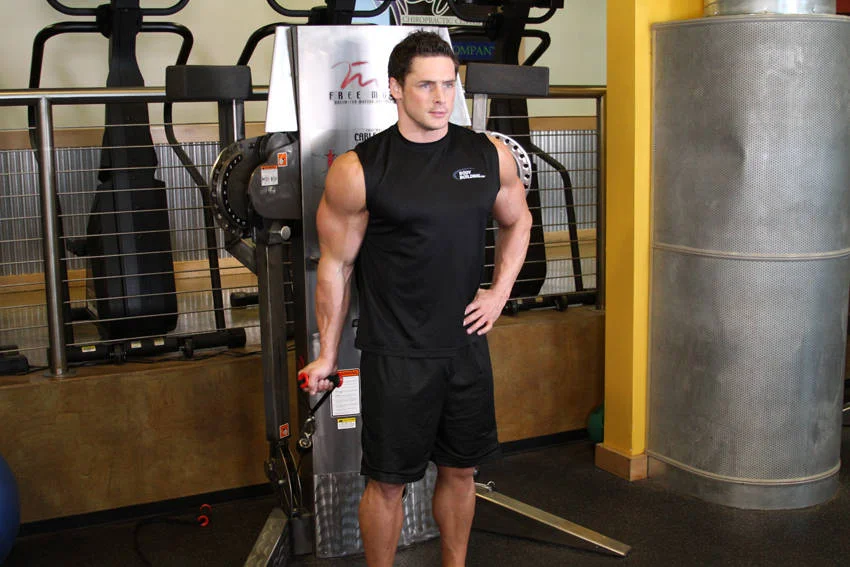
The Single-Arm Cable Curl is a unilateral isolation exercise that combines the constant tension benefits of cables with focused, one-arm-at-a-time training to build balanced bicep development and eliminate strength imbalances. By working each arm independently, you can achieve superior mind-muscle connection, identify and correct asymmetries, and maximize contraction intensity without compensation from the stronger side. The cable's smooth resistance curve provides consistent tension throughout the entire range of motion, making this an essential exercise for complete bicep development.
Muscles Worked
Primary Muscles
- Biceps Brachii (Long Head)
- Biceps Brachii (Short Head)
- Brachialis
Secondary Muscles
- Brachioradialis
- Forearm Flexors
- Anterior Deltoids
How to Perform
-
1
Attach a single handle to the low pulley of a cable machine and select an appropriate weight. Stand facing the machine in a stable stance with feet shoulder-width apart, maintaining slight knee flexion for balance and stability.
-
2
Grasp the handle with an underhand (supinated) grip, palm facing upward. Position yourself at an optimal distance from the machine where the cable creates a slight forward angle, ensuring constant tension throughout the movement without pulling you off balance.
-
3
Position your working arm's elbow close to your side and keep it stationary. Your non-working hand can rest on your hip or hold onto the machine for additional stability. Maintain an upright torso with your chest up and shoulders pulled back slightly.
-
4
Begin the curl by flexing your elbow, bringing the handle upward in a controlled arc toward your shoulder. Focus intensely on contracting your bicep, maintaining the supinated grip position, and keeping your wrist in a neutral to slightly flexed position throughout the concentric phase.
-
5
Continue curling until your forearm is nearly vertical and you achieve maximum bicep contraction. At the peak, hold for a one to two second squeeze, focusing all your mental attention on the working bicep to maximize neural activation and muscle fiber recruitment.
-
6
Lower the handle with complete control, taking two to three seconds for the eccentric phase. Resist the cable's pull throughout the entire descent, maintaining constant tension and avoiding any sudden drops or loss of control.
-
7
Extend your arm fully at the bottom without locking out completely or allowing the weight stack to rest. Maintain continuous tension on your bicep before beginning the next repetition. Complete all reps on one side before switching to the opposite arm.
Common Mistakes
-
Rotating the Torso During Reps
Many lifters unconsciously rotate their upper body or twist their torso to help lift the weight, especially as fatigue sets in. This transforms a bicep isolation exercise into a rotational movement that reduces bicep activation while increasing injury risk. Keep your torso completely stable and facing forward throughout the entire set.
-
Using Excessive Shoulder Movement
Allowing your shoulder to roll forward as you curl or elevating your shoulder at the top reduces bicep tension and creates unnecessary shoulder stress. Your shoulder joint should remain stable and neutral throughout the movement, with all motion occurring solely at the elbow joint.
-
Leaning Backward for Leverage
As the set becomes challenging, there's a tendency to lean back to gain mechanical advantage. This shifts stress away from the biceps and onto your lower back while reducing the exercise's effectiveness. Maintain an upright or slightly forward-leaning posture throughout the entire set.
-
Rushing Between Arms
Quickly switching between arms without adequate rest creates fatigue imbalances and prevents each arm from receiving optimal training stimulus. Take 30-60 seconds of rest between arms to ensure both sides receive equal effort and intensity, promoting balanced development.
Pro Tips
-
Start with Your Weaker Arm First
Always begin your set with your non-dominant or weaker arm when fresh. This ensures your weaker side receives maximum effort and attention, preventing strength imbalances from widening. Match the reps and form quality on your stronger side to what your weaker arm accomplished, not the other way around.
-
Anchor Your Non-Working Arm
Place your free hand on the cable machine frame or your hip to create a stable base and prevent unconscious torso rotation. This anchoring technique helps maintain proper posture and ensures all force generation comes from your working bicep rather than compensatory movements from other muscle groups.
-
Utilize Peak Contraction Holds
At the top of each rep, hold the peak contraction for two to three seconds while actively squeezing your bicep. This isometric hold at maximum contraction dramatically increases time under tension and metabolic stress, both powerful drivers of muscle hypertrophy. The mental focus required also enhances mind-muscle connection.
-
Experiment with Different Cable Heights
Vary the pulley position between low, mid, and high settings across different training sessions to alter the resistance angle and stress different portions of your bicep's strength curve. Low positions maximize the shortened position, while high positions emphasize the lengthened position, providing comprehensive development.
Variations
These variations modify body position, cable angle, or grip style to create different resistance profiles and muscle emphasis while maintaining the unilateral training benefits of single-arm cable work.
-
High Pulley Single-Arm Cable Curl
Setting the cable at shoulder height or above creates a unique downward resistance angle that emphasizes the stretched position and challenges your bicep differently. This variation provides an excellent finishing movement for complete muscle fiber recruitment.
-
Seated Single-Arm Cable Curl
Performing the curl while seated on a bench eliminates all lower body involvement and momentum, creating pure bicep isolation. This seated position is ideal for strict form training and ensures complete focus on the working muscle.
-
Cross-Body Single-Arm Cable Curl
Curling the handle across your midline toward the opposite shoulder targets the long head of the bicep more directly and creates a different contraction pattern. This diagonal movement path adds variety and hits your biceps from a fresh angle.
-
Behind-the-Body Single-Arm Cable Curl
Standing facing away from the machine with the cable behind you emphasizes the long head by placing the shoulder in extension. This advanced variation creates an intense stretch and powerful contraction throughout the range of motion.
Alternative Exercises
If cable machines are unavailable or you want to add variety to your unilateral arm training, these alternative exercises provide similar benefits for building balanced bicep development and correcting muscle imbalances.
-
Single-Arm Dumbbell Curl
The free-weight equivalent provides similar unilateral benefits with added stabilization demands. Dumbbells are universally available and allow for natural movement paths while building coordination alongside strength and size.
-
Concentration Curl
Performed seated with your elbow braced against your inner thigh, concentration curls offer maximum bicep isolation and eliminate nearly all momentum. This classic exercise is renowned for creating an incredible peak contraction and mind-muscle connection.
-
Single-Arm Preacher Curl
Using a preacher bench for one-arm curls combines unilateral training benefits with strict form enforcement. The pad prevents cheating while allowing you to focus completely on each individual arm without compensation patterns.
-
Single-Arm Band Curl
Resistance bands provide variable tension that increases as you curl, creating unique resistance characteristics. Bands are portable and joint-friendly, making them excellent for home workouts, warm-ups, or high-repetition finisher sets.

Track Your Single-Arm Cable Curl Progress
Log every set, track PRs, and watch your strength grow with replogr.
Join Beta