Assisted Pull-Up
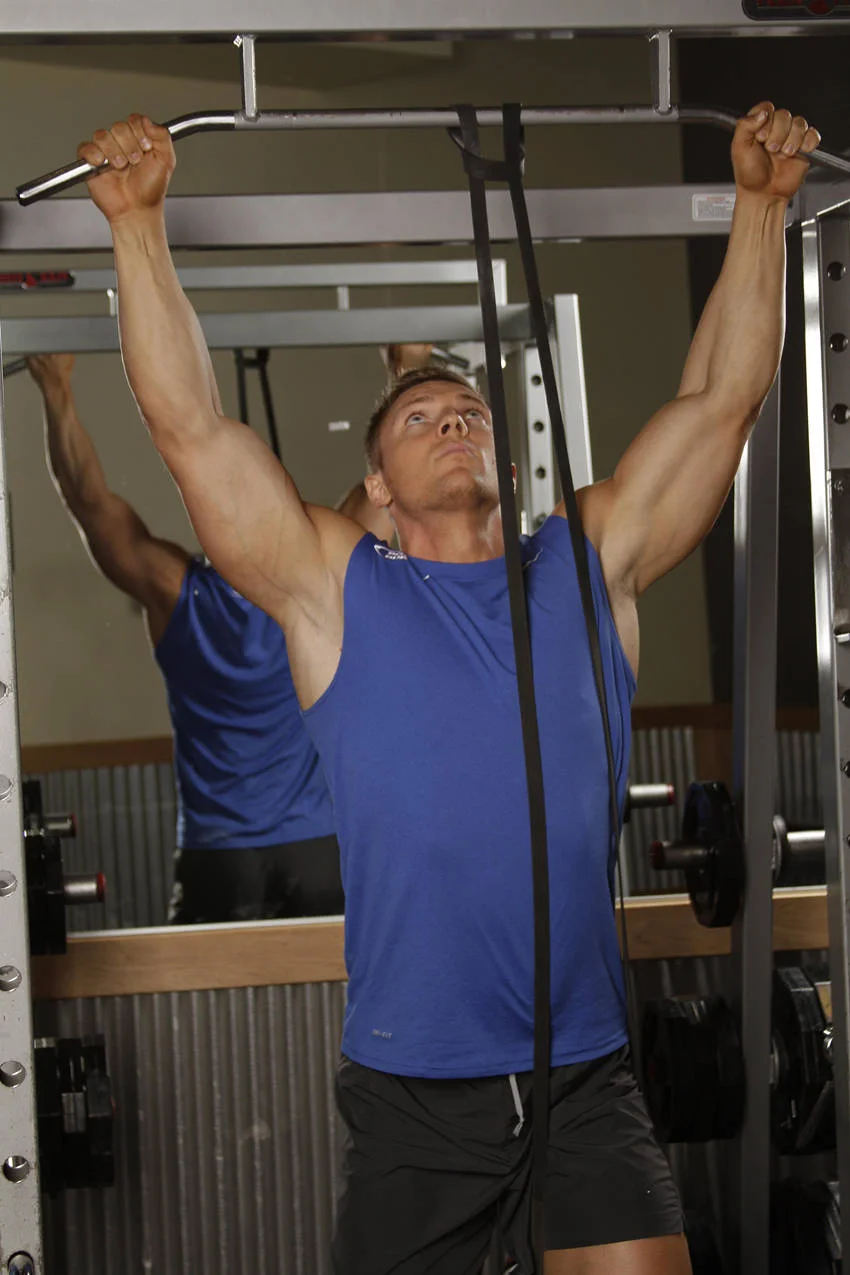
The Assisted Pull-Up is the perfect progression exercise for building the strength needed to perform unassisted pull-ups. Using a machine or resistance band to reduce the load, this exercise allows you to practice proper pull-up technique while developing the necessary back, arm, and grip strength. It's an essential tool for beginners working toward their first pull-up and for advanced lifters looking to increase training volume without fatigue.
Muscles Worked
Primary Muscles
- Latissimus Dorsi
- Teres Major
- Lower Trapezius
Secondary Muscles
- Biceps Brachii
- Posterior Deltoids
- Rhomboids
How to Perform
-
1
Set the assisted pull-up machine to your desired assistance weight. More assistance means an easier movement. Step onto the platform and grasp the bar with an overhand grip slightly wider than shoulder-width.
-
2
Place your knees or feet on the assistance pad, depending on machine design. Hang with your arms fully extended, shoulders engaged (not shrugged up), and core braced.
-
3
Initiate the pull by depressing your shoulder blades and engaging your lats. Think about pulling your elbows down and back rather than just bending your arms.
-
4
Pull yourself upward in a smooth, controlled motion until your chin clears the bar. Keep your chest up and avoid excessive swinging or kipping.
-
5
Pause briefly at the top position, squeezing your back muscles and feeling the full contraction in your lats.
-
6
Lower yourself back down with control, resisting the assistance. Fully extend your arms at the bottom while maintaining shoulder engagement.
-
7
Repeat for the desired number of reps, focusing on quality over quantity as you build strength toward unassisted pull-ups.
Common Mistakes
-
Using Too Much Assistance
Relying on excessive assistance prevents you from building the strength needed for unassisted pull-ups. Gradually reduce assistance weight over time to progress effectively toward your goal.
-
Partial Range of Motion
Not achieving full arm extension at the bottom or chin clearance at the top limits muscle development. Use a complete range of motion on every rep for maximum benefit.
-
Momentum and Swinging
Using body English to generate momentum reduces muscle activation and defeats the purpose of controlled strength building. Keep movements deliberate and controlled.
-
Neglecting the Negative
Rushing through the lowering phase wastes a valuable opportunity for strength development. The eccentric portion builds tremendous strength, so lower yourself slowly and with control.
Pro Tips
-
Focus on Progressive Overload
Track your assistance weight and gradually decrease it over time. Small reductions of 5-10 pounds every few weeks will steadily build your strength toward unassisted pull-ups without overwhelming your muscles.
-
Emphasize the Negative Phase
Spend 3-4 seconds lowering yourself on each rep. The eccentric phase is where significant strength gains occur and will accelerate your progress toward unassisted pull-ups.
-
Practice Dead Hangs Separately
Incorporate timed dead hangs into your routine to build grip strength and shoulder stability. Strong grip endurance is often the limiting factor in pull-up performance.
-
Use Different Grip Widths
Vary between wide, shoulder-width, and close-grip positions across training sessions. Each width emphasizes different portions of your back and arms, creating more complete development.
Variations
Try these variations to challenge your muscles differently and continue progressing toward unassisted pull-ups.
-
Band-Assisted Pull-Up
Loop a resistance band over the bar and place your foot or knee in it. Bands provide variable assistance (more at bottom, less at top), which better mimics the strength curve of unassisted pull-ups.
-
Negative Pull-Ups
Jump or step up to the top position, then lower yourself as slowly as possible (5-10 seconds). This eccentric-focused variation builds tremendous strength even if you can't perform full pull-ups yet.
-
Assisted Chin-Up (Underhand Grip)
Use a supinated grip to increase bicep involvement and make the movement slightly easier. This variation is excellent for building confidence and strength in beginners.
-
Partial Range Assisted Pull-Ups
Work specific sticking points by performing pull-ups through limited ranges. For example, focus on the bottom half or top half to strengthen weak areas.
Alternative Exercises
If you don't have access to an assisted pull-up machine, these alternatives will help you build similar strength.
-
Lat Pulldown
A machine-based vertical pulling movement that closely mimics pull-up mechanics. Progressively increase weight to build the strength needed for bodyweight pull-ups.
-
Inverted Row
A horizontal pulling exercise that builds back strength with adjustable difficulty based on body angle. Progress toward more challenging angles as you get stronger.
-
Resistance Band Pull-Downs
Anchor a band overhead and perform pulling motions. This accessible option provides variable resistance and can be done anywhere with a sturdy anchor point.
-
Machine-Assisted Chin-Up
Similar to assisted pull-ups but with an underhand grip. The increased bicep involvement makes this slightly easier and helps build foundational pulling strength.

Track Your Assisted Pull-Up Progress
Log every set, track PRs, and watch your strength grow with replogr.
Join Beta