Chest-Supported Dumbbell Row
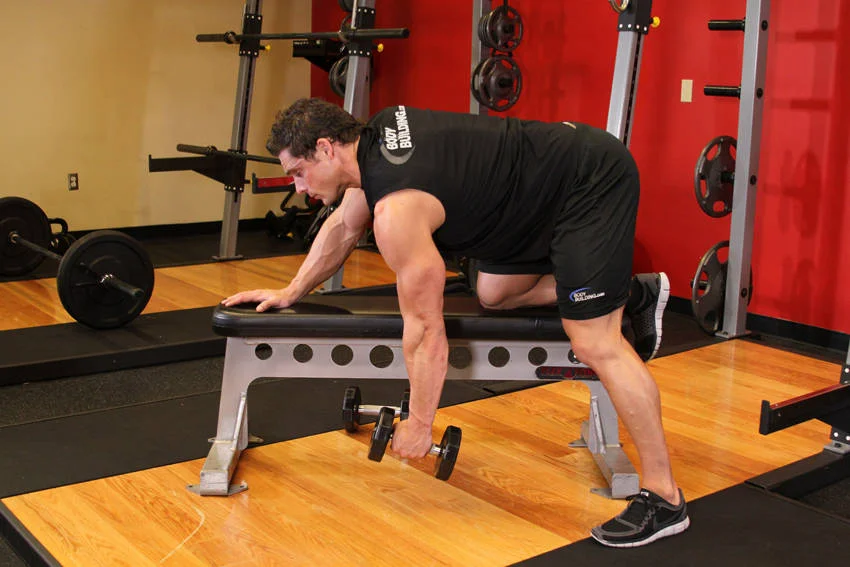
The chest-supported dumbbell row eliminates lower back strain by providing stable support throughout the movement, allowing you to focus purely on back muscle development. This exercise is ideal for targeting the upper and middle back muscles with strict form, making it perfect for those recovering from back injuries or wanting to maximize muscle isolation. The supported position enables you to lift heavy weights safely while maintaining perfect posture.
Muscles Worked
Primary Muscles
- Rhomboids
- Middle Trapezius
- Latissimus Dorsi
Secondary Muscles
- Posterior Deltoid
- Biceps Brachii
- Forearm Flexors
How to Perform
-
1
Set an adjustable bench to a 30-45 degree incline. Place two dumbbells on the floor at the head of the bench, positioned where your arms will naturally hang.
-
2
Lie face-down on the bench with your chest firmly pressed against the pad. Your feet should be on the ground or on the bench supports for stability, depending on bench height.
-
3
Reach down and grasp both dumbbells with a neutral grip (palms facing each other). Let your arms hang straight down, feeling a stretch in your lats and upper back.
-
4
Pull both dumbbells up by driving your elbows back and squeezing your shoulder blades together. Focus on leading with your elbows rather than your hands to maximize back activation.
-
5
At the top of the movement, squeeze your back muscles hard for a one-second count. Your elbows should be slightly higher than your torso.
-
6
Lower the dumbbells back down in a controlled manner to the starting position, maintaining tension and feeling the stretch in your back muscles. Avoid letting the weights drop quickly.
Common Mistakes
-
Lifting the Chest Off the Bench
Raising your chest to help lift the weight defeats the purpose of chest support and can strain your lower back. Keep your chest firmly planted throughout the entire set.
-
Using Momentum
Swinging the weights or using jerky movements reduces muscle tension and increases injury risk. Focus on smooth, controlled repetitions with a strong mind-muscle connection.
-
Flaring Elbows Too Wide
Allowing your elbows to flare out excessively shifts emphasis to the shoulders. Keep your elbows at a 45-degree angle from your body for optimal back engagement.
-
Shrugging at the Top
Elevating your shoulders and traps at the peak reduces middle back activation. Keep your shoulders down and focus on retracting your shoulder blades horizontally.
Pro Tips
-
Adjust Bench Angle for Emphasis
A steeper incline (45 degrees) emphasizes the upper back and rear delts, while a shallower angle (30 degrees) targets the mid-back and lats more. Experiment to find your sweet spot.
-
Focus on the Squeeze
Imagine trying to crack a walnut between your shoulder blades at the top of each rep. This visualization helps maximize contraction and build better back thickness.
-
Use a Spotter for Heavy Sets
Have a partner hand you the dumbbells when lying on the bench, especially with heavier weights. This saves energy and maintains proper positioning from the start.
-
Breathe Properly
Exhale as you pull the weights up and inhale as you lower them. Proper breathing maintains core stability and helps you generate more power through each rep.
Variations
Modify this exercise to target your back muscles from different angles or adjust the difficulty level.
-
Single-Arm Chest-Supported Row
Perform one arm at a time to address muscular imbalances and allow for greater range of motion and stretch.
-
Chest-Supported T-Bar Row
Using a T-bar machine or landmine setup provides a different pulling angle and allows you to load more weight effectively.
-
Alternating Dumbbell Row
Row one dumbbell at a time while keeping the other extended, increasing time under tension and core engagement.
-
Wide-Grip Chest-Supported Row
Use a wider grip to emphasize the upper back and rear deltoids, creating more back width and thickness in the upper region.
Alternative Exercises
These exercises work similar muscle groups with different equipment or movement patterns.
-
Seal Row
Performed on a flat elevated bench with a barbell, providing excellent chest support and allowing heavy loading for maximum strength gains.
-
Seated Cable Row
Offers constant tension throughout the movement with adjustable resistance and multiple grip options for varied muscle activation.
-
Machine Chest-Supported Row
A beginner-friendly option with a fixed movement path that ensures proper form and allows you to focus purely on muscle contraction.
-
Inverted Row
A bodyweight alternative that can be performed with adjustable difficulty by changing body angle, great for home workouts or beginners.

Track Your Chest-Supported Dumbbell Row Progress
Log every set, track PRs, and watch your strength grow with replogr.
Join Beta