Inverted Row
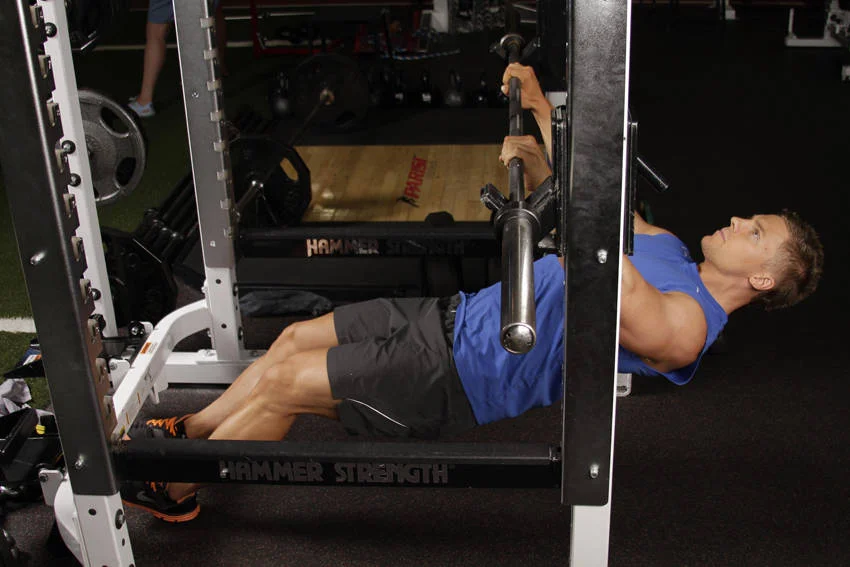
The inverted row is a fundamental horizontal pulling exercise that builds upper back strength and muscle using just your bodyweight and a barbell or suspension trainer. Often called the "reverse push-up," this movement targets the lats, rhomboids, and rear delts while developing rock-solid core stability. It's an excellent progression exercise toward pull-ups and serves as a safer alternative to bent-over rows for those with lower back concerns.
Muscles Worked
Primary Muscles
- Latissimus Dorsi
- Rhomboids
- Middle Trapezius
Secondary Muscles
- Biceps
- Rear Deltoids
- Core Muscles
How to Perform
-
1
Set up a barbell in a power rack or Smith machine at about waist height. You can also use TRX straps, gymnastic rings, or a sturdy table.
-
2
Lie underneath the bar with your body fully extended. Grip the bar slightly wider than shoulder-width with an overhand grip, arms fully straight.
-
3
Position your body so only your heels and hands touch the ground. Keep your body in a straight line from head to heels, engaging your core and glutes.
-
4
Pull yourself up by driving your elbows back and squeezing your shoulder blades together. Aim to touch your chest to the bar while maintaining body rigidity.
-
5
Pause briefly at the top with your chest near the bar, then lower yourself with control back to the starting position with arms fully extended.
-
6
Maintain the straight body position throughout the entire movement. Avoid sagging your hips or pike your body up.
Common Mistakes
-
Sagging Hips
Letting your hips drop creates lower back strain and reduces core engagement. Keep your body in a straight plank position throughout the entire movement by actively engaging your glutes and core.
-
Shrugging Shoulders
Pulling with your traps instead of your lats reduces back engagement and can cause neck strain. Initiate the movement by retracting your shoulder blades, not by shrugging upward.
-
Incomplete Range of Motion
Not pulling high enough or not fully extending at the bottom limits muscle development. Pull until your chest touches or nearly touches the bar and fully extend your arms at the bottom.
-
Using Momentum
Bouncing or jerking to complete reps reduces muscle tension and effectiveness. Move smoothly and under control through both the pulling and lowering phases.
Pro Tips
-
Adjust Bar Height for Difficulty
Raising the bar makes the exercise easier by reducing the weight you pull. Lowering it makes it harder. Find your sweet spot and progressively lower the bar as you get stronger.
-
Elevate Your Feet for Progression
Placing your feet on a box or bench increases the difficulty significantly by putting more of your bodyweight into the movement. This is an excellent way to progress once regular inverted rows become easy.
-
Think "Chest to Bar"
Focus on pulling your chest to the bar rather than just pulling your arms. This cue helps ensure proper scapular retraction and maximum back engagement.
-
Experiment with Grip Variations
Try underhand, overhand, or neutral grips to hit your back from different angles and prevent accommodation. Each grip variation emphasizes slightly different muscle groups.
Variations
Try these variations to progress or regress the movement based on your fitness level:
-
Feet-Elevated Inverted Row
Place your feet on a bench or box to increase difficulty and load more bodyweight into the movement.
-
Weighted Inverted Row
Add a weight vest or place a plate on your chest for additional resistance once bodyweight becomes too easy.
-
TRX/Ring Inverted Row
Using suspension trainers adds instability, forcing greater core and stabilizer muscle engagement throughout the movement.
-
Single-Arm Inverted Row
An advanced variation that dramatically increases difficulty and addresses strength imbalances between sides.
Alternative Exercises
If you don't have access to equipment for inverted rows or need different stimulus, try these alternatives:
-
Bent-Over Barbell Row
A classic horizontal pulling movement that targets similar muscles with adjustable resistance through added weight.
-
Cable Seated Row
Provides constant tension throughout the range of motion and allows for precise weight adjustments.
-
Chest-Supported Dumbbell Row
Eliminates lower back involvement by providing chest support, allowing you to focus purely on back muscle engagement.
-
Pull-Up (Assisted or Regular)
A vertical pulling movement that works similar muscles from a different angle and is an excellent companion exercise.

Track Your Inverted Row Progress
Log every set, track PRs, and watch your strength grow with replogr.
Join Beta