Neutral-Grip Pull-Up
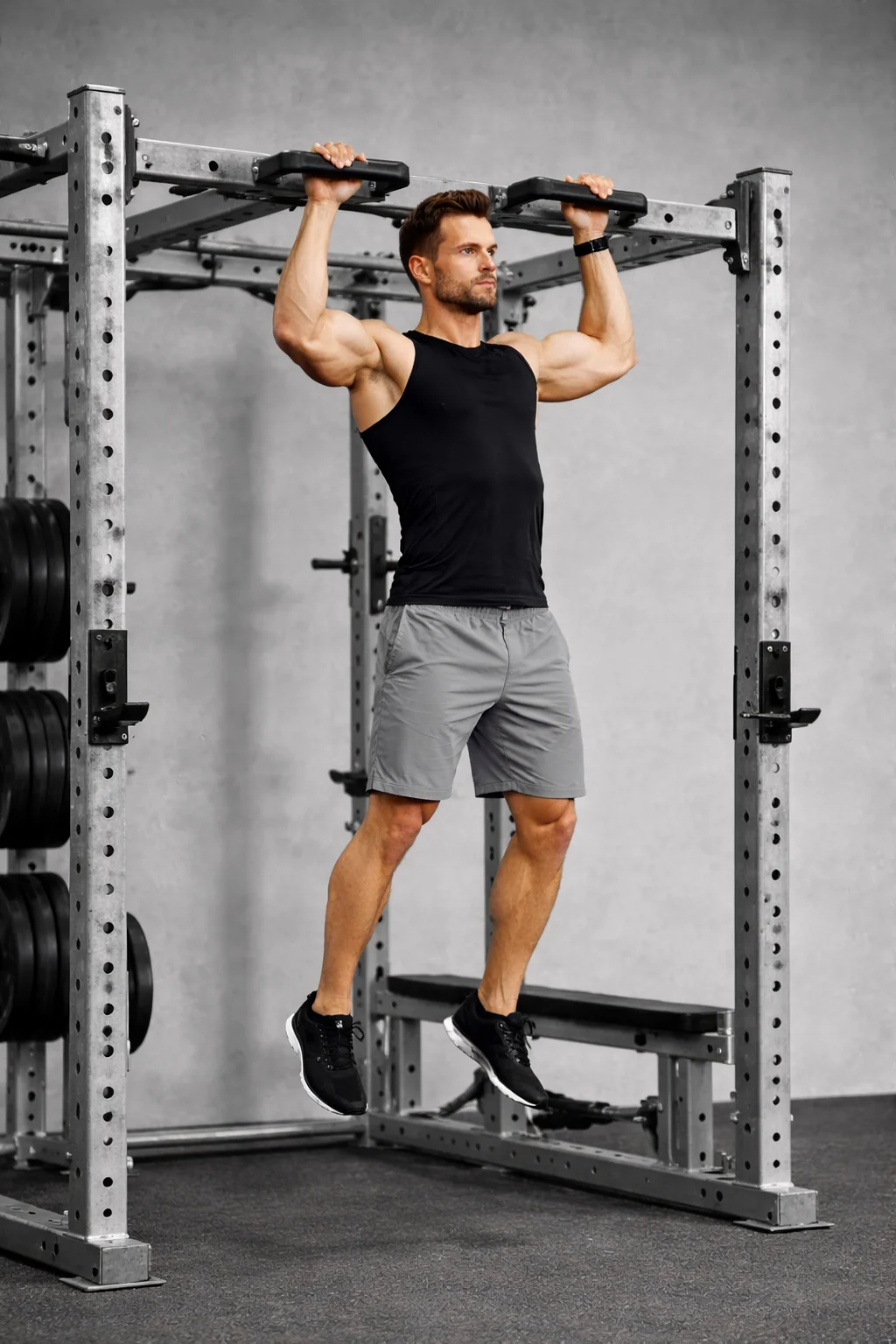
The neutral-grip pull-up is a powerful upper body exercise performed with palms facing each other on parallel handles, offering a more natural hand position than traditional pull-ups. This variation reduces stress on the shoulders and wrists while maximizing activation of the lats, biceps, and forearms. It's an excellent choice for building pulling strength and is often easier to perform than wide-grip variations, making it ideal for both beginners and advanced lifters.
Muscles Worked
Primary Muscles
- Latissimus Dorsi
- Biceps Brachii
- Brachialis
Secondary Muscles
- Trapezius
- Rhomboids
- Forearms
How to Perform
-
1
Grasp the parallel handles or neutral-grip attachment with palms facing each other, hands shoulder-width apart. Hang with arms fully extended and feet off the ground, either bent at the knees or crossed behind you.
-
2
Engage your core and create tension throughout your body. Depress your shoulder blades down and back, establishing a stable base before initiating the pull.
-
3
Pull yourself upward by driving your elbows down toward your sides and slightly behind your body. Focus on pulling with your lats rather than just your arms.
-
4
Continue pulling until your chin clears the bar or handles, keeping your chest up and avoiding excessive lean backward. At the top, squeeze your lats and maintain control.
-
5
Lower yourself back down with control to the full hang position, maintaining tension in your lats and shoulder blades. Avoid swinging or using momentum.
-
6
Reset at the bottom with arms fully extended before beginning the next repetition, ensuring each rep starts from a complete dead hang position.
Common Mistakes
-
Using Momentum and Swinging
Kipping or swinging to generate momentum defeats the purpose of building true pulling strength and increases injury risk. Keep your body controlled and use only muscular force to complete each rep.
-
Not Achieving Full Range of Motion
Stopping short at the bottom or not pulling high enough at the top limits muscle development. Always start from a complete dead hang and pull until your chin clears the bar.
-
Shrugging Shoulders Up
Allowing your shoulders to rise toward your ears during the pull reduces lat engagement and places unnecessary stress on the neck. Keep your shoulders depressed throughout the movement.
-
Leading with the Chest Instead of Elbows
Pulling by thrusting your chest forward rather than driving elbows down reduces back engagement and makes the exercise less effective. Focus on elbow movement to maximize lat activation.
Pro Tips
-
Think "Elbows to Hips"
Visualizing pulling your elbows down toward your hips rather than pulling your body up helps engage your lats more effectively and creates a stronger mind-muscle connection.
-
Control the Negative
Take 2-3 seconds to lower yourself on the eccentric phase. This controlled descent builds tremendous strength and muscle, often more than the concentric portion of the lift.
-
Add Weight Progressively
Once you can perform 10-12 clean reps, add weight with a dip belt or weighted vest to continue building strength. Even small increments of 2.5-5 pounds make a significant difference.
-
Grip Width Matters
Experiment with slightly narrower or wider hand positions to find what feels most comfortable for your shoulder structure. The optimal position should allow for strong pulling without wrist or shoulder discomfort.
Variations
Try these variations to challenge yourself differently or work around limitations:
-
Weighted Neutral-Grip Pull-Up
Add external resistance using a dip belt, weighted vest, or holding a dumbbell between your feet to increase difficulty and build maximum strength.
-
Assisted Neutral-Grip Pull-Up
Use a resistance band or assisted pull-up machine to reduce the amount of bodyweight you're lifting, perfect for building up to unassisted reps.
-
L-Sit Neutral-Grip Pull-Up
Hold your legs straight out in front of you in an L-position while performing the pull-up to add significant core and hip flexor engagement.
-
Slow Eccentric Neutral-Grip Pull-Up
Focus on taking 5-10 seconds to lower yourself from the top position, maximizing time under tension and building exceptional strength in the negative phase.
Alternative Exercises
If you don't have access to neutral-grip handles or want to target similar muscles differently, try these alternatives:
-
Close-Grip Lat Pulldown
A machine-based alternative that mimics the neutral-grip pulling pattern and allows you to adjust resistance precisely, ideal for beginners or high-rep training.
-
Chin-Up
Performed with an underhand grip, this variation also reduces shoulder stress and heavily emphasizes biceps alongside lat development.
-
Inverted Row with Neutral Grip
A horizontal pulling movement that targets similar muscles with less loading, excellent for building pulling strength and muscle endurance.
-
Hammer Strength Pulldown
A machine that provides independent arm movement with neutral grips, allowing you to work each side of your back with focused control.

Track Your Neutral-Grip Pull-Up Progress
Log every set, track PRs, and watch your strength grow with replogr.
Join Beta