One-Arm Dumbbell Row
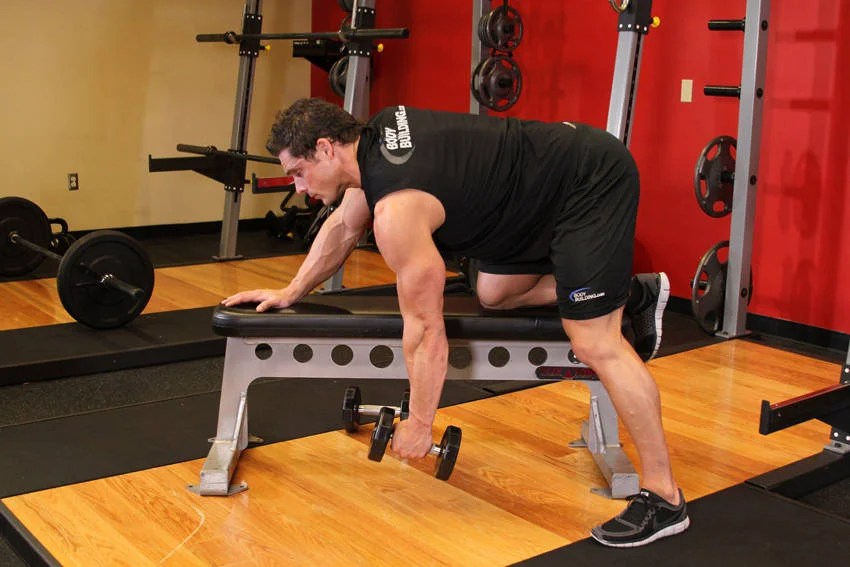
The one-arm dumbbell row is a unilateral back exercise that builds strength and muscle mass while correcting muscular imbalances between sides. This powerful movement allows you to focus on one side at a time, enabling better mind-muscle connection and the ability to lift heavier weights with proper form. It's an essential exercise for developing a thick, strong back and improving overall pulling strength.
Muscles Worked
Primary Muscles
- Latissimus Dorsi
- Rhomboids
- Middle Trapezius
Secondary Muscles
- Biceps Brachii
- Posterior Deltoid
- Core Stabilizers
How to Perform
-
1
Place a dumbbell on the floor and position a flat bench beside it. Stand with your feet shoulder-width apart, with the dumbbell on your right side if you're starting with your right arm.
-
2
Place your left hand and left knee on the bench for support, keeping your back flat and parallel to the ground. Your right foot should remain firmly planted on the floor for stability.
-
3
Reach down and grasp the dumbbell with your right hand using a neutral grip (palm facing your body). Let your arm hang straight down with your shoulder slightly stretched, creating tension in your lat.
-
4
Keeping your core tight and back flat, pull the dumbbell up toward your hip by driving your elbow back and up. Focus on squeezing your shoulder blade toward your spine at the top of the movement.
-
5
Hold the contracted position for a brief moment, ensuring maximum muscle engagement. Keep your torso stable without rotating or twisting.
-
6
Lower the dumbbell back to the starting position in a controlled manner, allowing your lat to stretch fully. Maintain tension throughout the entire movement.
-
7
Complete all reps on one side before switching to the other. Adjust the bench and dumbbell position, then repeat the movement with your left arm.
Common Mistakes
-
Rotating the Torso
Opening up your torso and rotating your body to lift the weight reduces back muscle activation and shifts the work to momentum. Keep your shoulders square and parallel to the ground throughout the movement.
-
Using Too Much Bicep
Curling the weight up instead of rowing it back engages the biceps more than the back muscles. Focus on driving your elbow behind you and pulling with your lat, not your arm.
-
Rounding the Back
Allowing your spine to round puts excessive stress on your lower back and reduces the effectiveness of the exercise. Maintain a neutral spine position with your core engaged throughout the entire set.
-
Insufficient Range of Motion
Not lowering the weight fully or not pulling high enough limits muscle development. Ensure you're getting a full stretch at the bottom and a complete contraction at the top of each rep.
Pro Tips
-
Think Elbow, Not Hand
Visualize pulling your elbow back toward your hip rather than lifting the dumbbell. This mental cue helps engage your lat and upper back muscles more effectively, reducing bicep involvement.
-
Experiment with Row Angle
Pulling toward your hip emphasizes the lower lats, while pulling toward your chest targets the upper back and rhomboids more. Try both angles to develop complete back thickness.
-
Control the Negative
Take 2-3 seconds to lower the weight back down. The eccentric (lowering) phase is crucial for muscle growth and strength development. Don't just drop the weight after each rep.
-
Use Straps for Higher Reps
If your grip fails before your back is fatigued, consider using lifting straps. This allows you to push your back muscles to their limit without being held back by forearm strength.
Variations
Try these variations to target your back from different angles and challenge your muscles in new ways.
-
Standing One-Arm Row
Perform without a bench, hinging at the hips with one hand on your knee. Requires more core stability and balance.
-
Incline Bench One-Arm Row
Set the bench to a 30-45 degree incline and rest your chest on it. This variation provides excellent support and isolates the back muscles.
-
Kroc Row
A high-rep, heavier variation with controlled momentum. Uses body English to handle more weight while maintaining tension on the back.
-
Meadows Row
Using a barbell in a landmine setup, this variation provides a unique pulling angle that emphasizes the lower lats and creates an intense stretch.
Alternative Exercises
If you don't have access to dumbbells or want to work similar muscles with different equipment, consider these alternatives.
-
Bent-Over Barbell Row
A bilateral rowing movement that allows you to lift heavier weights and build overall back thickness and strength.
-
Seated Cable Row
Provides constant tension throughout the movement and allows for various grip attachments to target different back muscles.
-
T-Bar Row
Excellent for building back thickness with a stable, supported position that allows heavy loading.
-
Inverted Row
A bodyweight alternative that can be performed anywhere with a bar or suspension trainer, great for beginners or as a finisher.

Track Your One-Arm Dumbbell Row Progress
Log every set, track PRs, and watch your strength grow with replogr.
Join Beta