T-Bar Row
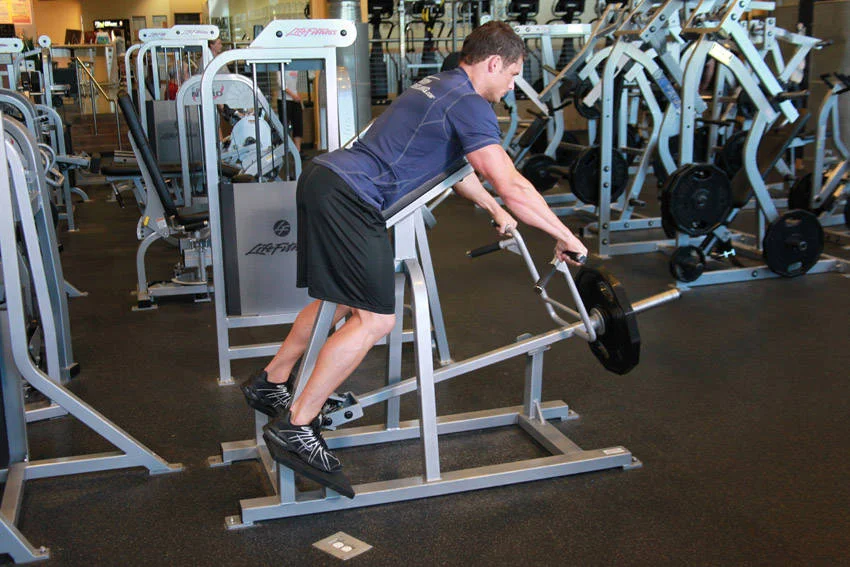
The T-bar row is a powerful compound exercise that allows you to load heavy weight while maintaining a more natural pulling angle compared to traditional barbell rows. With its unique setup and leveraged position, this movement excels at building overall back thickness, particularly targeting the middle back and lower lats, making it a favorite among bodybuilders and strength athletes for developing a dense, muscular back.
Muscles Worked
Primary Muscles
- Middle Back (Rhomboids)
- Latissimus Dorsi
- Trapezius
Secondary Muscles
- Biceps
- Rear Deltoids
- Spinal Erectors
How to Perform
-
1
Load weight plates onto one end of a barbell placed in a landmine attachment or secured in a corner. Alternatively, position yourself at a T-bar row machine.
-
2
Straddle the bar with your feet shoulder-width apart. Attach a V-handle or double-D handle under the loaded end of the barbell and grip it with both hands.
-
3
Hinge at your hips and bend your knees slightly, lowering your torso to approximately 45 degrees. Keep your back straight, chest up, and core engaged throughout the movement.
-
4
Allow the weight to hang with your arms fully extended, creating a stretch in your lats. This is your starting position with the bar hovering just above the ground.
-
5
Pull the bar toward your chest by driving your elbows back and squeezing your shoulder blades together. Focus on using your back muscles rather than your arms to initiate the movement.
-
6
Continue pulling until the plates reach your chest and your elbows are fully behind your torso. Hold the peak contraction for a brief pause, maximizing the squeeze in your back.
-
7
Lower the weight under control back to the starting position, maintaining tension in your back muscles. Repeat for the desired number of repetitions while maintaining proper form throughout.
Common Mistakes
-
Rounding the Lower Back
Allowing your lower back to round under heavy load increases injury risk significantly. Maintain a neutral spine by engaging your core and keeping your chest up throughout the entire range of motion.
-
Using Too Much Hip Extension
Jerking the weight up by extending your hips and standing more upright turns the exercise into a momentum-based movement. Keep your torso angle constant and let your back muscles do the work.
-
Pulling with the Arms
Relying on bicep strength rather than back engagement reduces the effectiveness of the exercise. Initiate the pull by retracting your shoulder blades, thinking of your arms as hooks that simply connect you to the weight.
-
Insufficient Range of Motion
Not achieving full extension at the bottom or failing to pull the weight all the way to your chest limits muscle development. Use a weight that allows you to complete the full range of motion with control.
Pro Tips
-
Experiment with Different Handle Positions
Try various grip attachments - a narrow V-handle emphasizes lat activation, while a wider grip targets the middle and upper back more intensely. Rotating through different handles provides comprehensive back development.
-
Use Smaller Plates for Greater Range
Loading the bar with multiple smaller plates instead of fewer large ones increases your range of motion by allowing the bar to travel lower before the plates contact the ground, enhancing lat stretch and overall effectiveness.
-
Position Your Feet Strategically
Standing with your feet slightly behind the bar rather than directly underneath creates a better pulling angle and reduces the tendency to use excessive leg drive during the movement.
-
Control the Negative Phase
Take 2-3 seconds to lower the weight back down on each rep. The eccentric portion of the T-bar row is where significant muscle damage and growth stimulus occurs, so don't rush it.
Variations
These T-bar row variations offer different angles and equipment options to keep your back training fresh and effective:
-
Chest-Supported T-Bar Row
Using a specialized machine with chest support eliminates lower back involvement, allowing you to focus purely on back muscle contraction and work safely to failure.
-
Meadows Row
A unilateral T-bar row variation named after John Meadows that provides an extreme lat stretch and allows for slight torso rotation to maximize muscle engagement.
-
Wide-Grip T-Bar Row
Using a wider grip attachment shifts more emphasis to the upper back, rhomboids, and rear delts, creating a different stimulus pattern.
-
Pronated Grip T-Bar Row
Using an overhand grip on a straight bar increases forearm and grip demands while slightly altering the back muscle activation pattern.
Alternative Exercises
If T-bar rows aren't available or you want similar back-building benefits:
-
Barbell Row
The traditional bent-over barbell row provides similar back stimulation with a slightly different angle and requires more stabilization from your core.
-
Chest-Supported Dumbbell Row
Offers bilateral or unilateral training with similar lower back relief, allowing you to focus entirely on back muscle contraction.
-
Cable Row
Provides constant tension throughout the movement and allows for various handle attachments to target different areas of the back from a seated position.
-
Machine Row
A guided rowing motion that eliminates stabilization requirements, making it easier to isolate and overload the back muscles safely.

Track Your T-Bar Row Progress
Log every set, track PRs, and watch your strength grow with replogr.
Join Beta