Cable Chest Fly
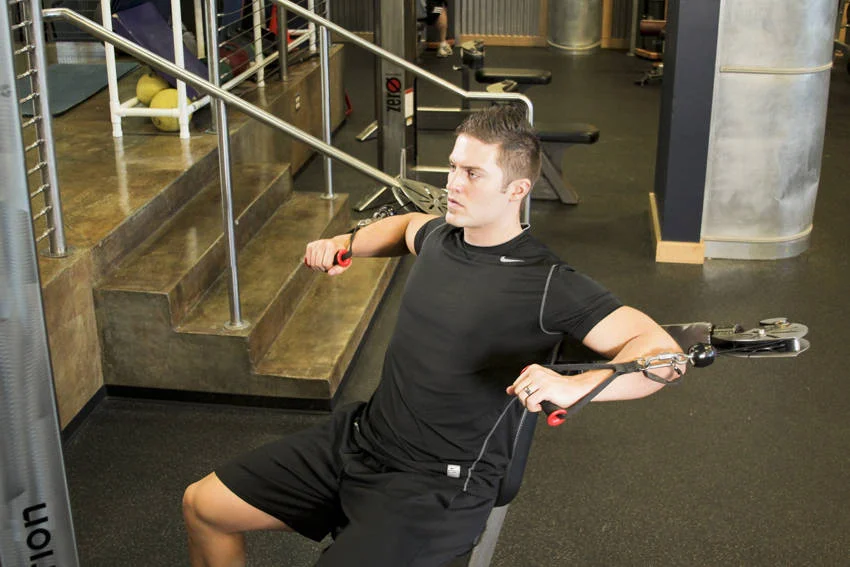
The cable chest fly is an exceptional isolation exercise that targets your chest through constant tension throughout the entire range of motion. Unlike dumbbell flys, cables maintain resistance even at peak contraction, allowing for maximum muscle engagement and a powerful chest squeeze. This movement is ideal for developing chest width, improving muscle definition, and finishing off your chest workout with precision.
Muscles Worked
Primary Muscles
- Pectoralis Major (Chest)
- Anterior Deltoids (Front Shoulders)
Secondary Muscles
- Biceps Brachii (Stabilization)
- Core Stabilizers
- Serratus Anterior
How to Perform
-
1
Setup: Set the cable pulleys to chest height on both sides of a cable station. Attach D-handles to each cable and select an appropriate weight. Stand in the center with your feet shoulder-width apart.
-
2
Starting Position: Grab both handles with palms facing forward and step forward slightly to create tension on the cables. Extend your arms out to your sides with a slight bend in your elbows. Lean your torso slightly forward and brace your core.
-
3
Contraction: Keeping your elbows slightly bent and fixed in position, bring both handles together in front of your chest in a wide arcing motion. Focus on squeezing your chest muscles as if you're hugging a large tree.
-
4
Peak Squeeze: At the center position, pause for a second and contract your chest hard. The handles should meet or slightly overlap in front of your sternum. Maintain constant tension on your pecs throughout.
-
5
Return: Slowly reverse the movement, allowing your arms to open wide in a controlled manner. Feel the stretch across your chest as you return to the starting position. Don't let the weight stack slam down.
-
6
Repeat: Maintain the same slight elbow bend throughout all repetitions. Keep your core engaged and avoid swaying or using momentum to complete the movement.
Common Mistakes
-
Bending Elbows Too Much
Excessively bending your elbows turns the fly into a pressing movement, reducing chest isolation and shifting work to your triceps. Maintain a slight, fixed bend throughout the entire set.
-
Using Too Much Weight
Going too heavy forces you to use momentum and poor form, reducing chest activation and increasing injury risk. Choose a weight that allows controlled movement with proper technique.
-
Rushing the Eccentric Phase
Letting the cables pull your arms back quickly wastes the stretch portion of the movement. Control the return phase to maximize time under tension and muscle growth.
-
Shrugging Shoulders Forward
Allowing your shoulders to round forward at the peak contraction reduces chest engagement and can strain your shoulder joints. Keep your shoulder blades retracted and chest up throughout.
Pro Tips
-
Focus on the Squeeze
The peak contraction is where cables shine. Hold the squeeze at the center for 1-2 seconds on each rep to maximize muscle fiber recruitment and metabolic stress for growth.
-
Experiment with Stance
Try a staggered stance with one foot forward for better stability. This allows you to maintain balance while focusing purely on chest contraction without worrying about tipping over.
-
Use a Full Stretch
Allow your arms to open as wide as comfortably possible while maintaining shoulder safety. This deep stretch position activates more muscle fibers and enhances overall chest development.
-
Mind-Muscle Connection
Visualize your chest muscles pulling the cables together rather than thinking about moving your hands. This mental cue dramatically improves activation and results in better gains.
Variations
These variations change the cable angle or body position to target different areas of your chest while maintaining the isolation benefits of cable work.
-
Single-Arm Cable Fly
Perform the movement one side at a time to address strength imbalances and increase core engagement.
-
Seated Cable Fly
Sit on a bench between cables to remove lower body from the equation and purely isolate chest muscles.
-
Lying Cable Fly
Lie on a flat bench positioned between low cables for a movement pattern similar to dumbbell flys with constant tension.
-
Cable Fly with Rotation
Cross your hands over at the center and rotate slightly to emphasize inner chest development and peak contraction.
Alternative Exercises
If cables aren't available or you want different equipment options, these exercises provide similar chest isolation benefits with alternative resistance methods.
-
Dumbbell Chest Fly
Classic isolation movement using dumbbells on a flat bench, providing maximum stretch but less tension at the top.
-
Pec Deck Machine
Machine-based fly movement with a fixed path, ideal for beginners or training to failure safely.
-
Resistance Band Flys
Portable option using resistance bands that mimics cable resistance for home or travel workouts.
-
Dumbbell Press with Squeeze
A pressing movement with dumbbells held together throughout the motion to maintain constant chest tension.

Track Your Cable Chest Fly Progress
Log every set, track PRs, and watch your strength grow with replogr.
Join Beta