Chest Fly
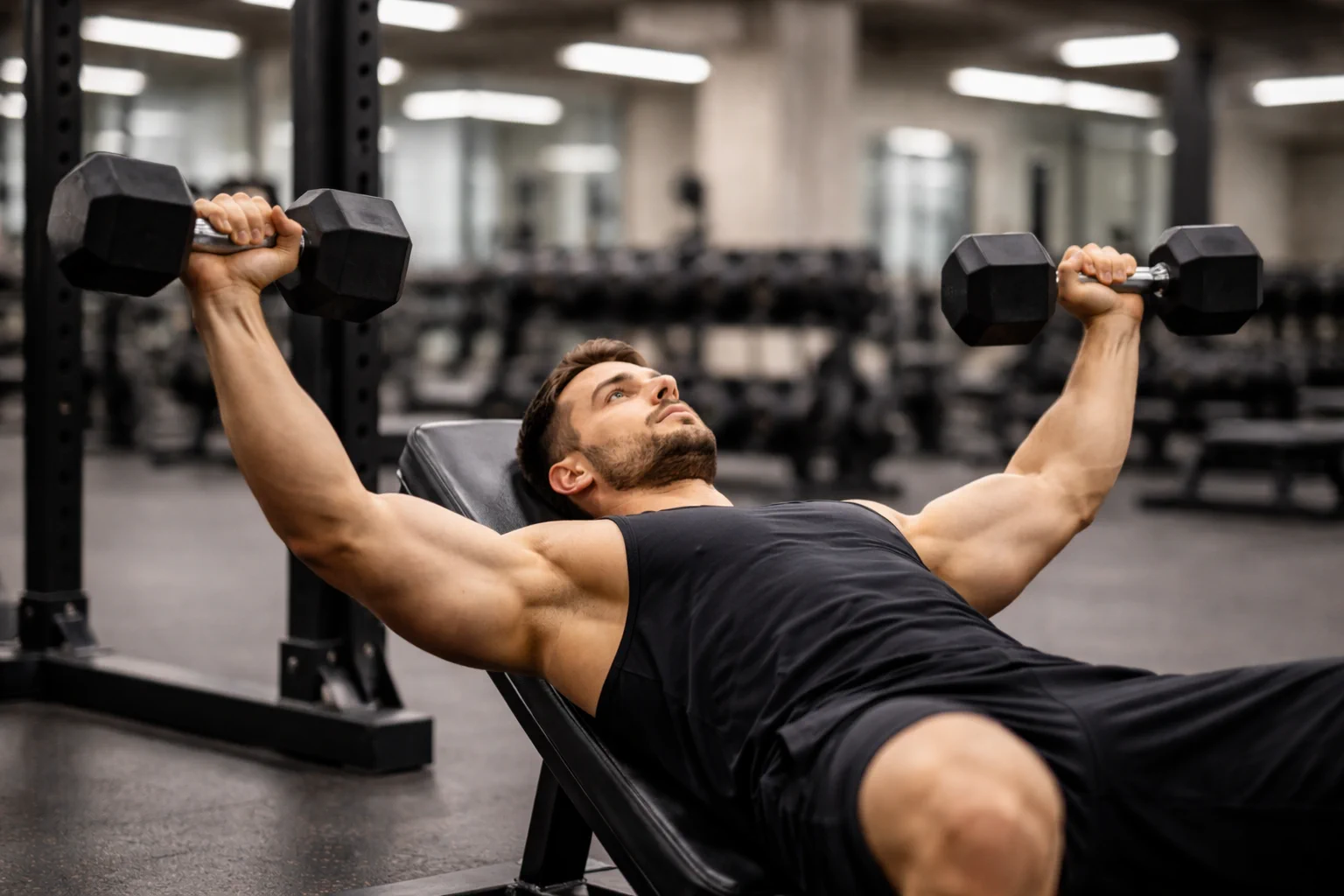
The chest fly machine isolates your pectorals through pure horizontal adduction, removing triceps from the equation. Perfect for adding targeted volume after compound pressing movements.
Muscles Worked
Primary Muscles
- Pectoralis Major (sternal and clavicular heads)
Secondary Muscles
- Anterior Deltoids
- Serratus Anterior
How to Perform
Adjust the seat height so the handles align with the middle of your chest when seated.
Sit with your back flat against the pad and feet firmly planted on the floor.
Grasp the handles with palms facing forward and elbows slightly bent (10-15 degrees).
Start with arms wide in the open position, feeling a deep stretch across your chest.
Squeeze the handles together in front of your chest using a smooth hugging motion.
Control the weight back to the starting position, maintaining constant tension on your chest.
Common Mistakes
Locking Elbows Completely
Straightening your arms fully shifts tension from chest to elbow joints, increasing injury risk and reducing muscle activation.
Using Momentum by Bouncing
Rapidly bouncing the weight reduces time under tension and chest muscle recruitment. Control is key for hypertrophy.
Rounding Shoulders Forward
Allowing shoulders to roll forward puts excessive stress on the shoulder joint and reduces chest stretch at the bottom.
Not Controlling the Negative
Letting the weight fly back eliminates the eccentric portion, which is crucial for muscle growth and strength gains.
Training Notes
Chest Fly is a controlled chest movement that benefits from strict form and steady tempo.
Chest Fly rewards a controlled press and a deliberate stretch. Set the shoulder blades gently back and down so the chest does the work rather than the front delts. Keep the ribs stacked over the pelvis and avoid flaring up as the load gets heavier. If you lose position, reduce the weight and prioritize a smooth arc that finishes with the hands slightly inside shoulder width.
Think about driving the elbows toward the midline without collapsing the wrists. A brief pause at the stretched position builds stability and reinforces good depth. Use a tempo like 2 seconds down, 1 second pause, 1 second up for most hypertrophy work. This keeps tension on the pecs and prevents bouncing through the bottom.
Programming wise, Chest Fly fits well after a heavier press or as a main movement on a machine or cable day. For size, 3–4 sets of 8–15 reps with 1–2 reps in reserve is a solid starting point. For strength, keep reps in the 5–8 range and extend rest to 2–3 minutes while maintaining form quality.
If you feel the shoulders more than the chest, slightly narrow the grip and lower the elbows a few degrees. Make sure the hands travel on a gentle inward arc rather than straight forward. Cues like “hug the barrel” or “bring biceps toward the chest” help many lifters keep the pecs engaged throughout the press.
For joint comfort, keep the wrists stacked over the forearms and avoid overextending at lockout. A small range short of full lock keeps tension on the pecs and reduces stress on the elbows and shoulders. When fatigue accumulates, focus on clean reps rather than grinding the last inches of motion.
Pro Tips
Focus on squeezing your chest at the peak contraction for 1-2 seconds to maximize muscle fiber recruitment.
Keep your shoulder blades retracted and pressed against the pad throughout the entire movement.
Exhale forcefully as you bring the handles together to enhance core stability and chest contraction.
Use a tempo of 2 seconds up, 1 second squeeze, 3 seconds down for optimal hypertrophy stimulus.
Variations
Single-Arm Chest Fly
Perform the movement one arm at a time to address strength imbalances and increase core stabilization demands.
Set cables high and pull downward to emphasize the lower chest fibers and sternal pectoralis major.
Set cables low and pull upward to target the upper chest and clavicular head of the pectoralis.
Alternative Exercises
Dumbbell Chest Fly
Free weight variation requiring greater stabilizer muscle activation throughout the movement.
Cable Chest Fly
Provides constant tension throughout the entire range of motion with adjustable angle options.
Pec Deck Machine
Similar isolation movement with pads instead of handles for a different grip and feel.
Push-Up with Squeeze
Bodyweight alternative that emphasizes chest contraction when squeezing hands together.

Track Your Chest Fly Progress
Log every set, track PRs, and watch your strength grow with replogr.
Join Beta