Bicycle Crunch
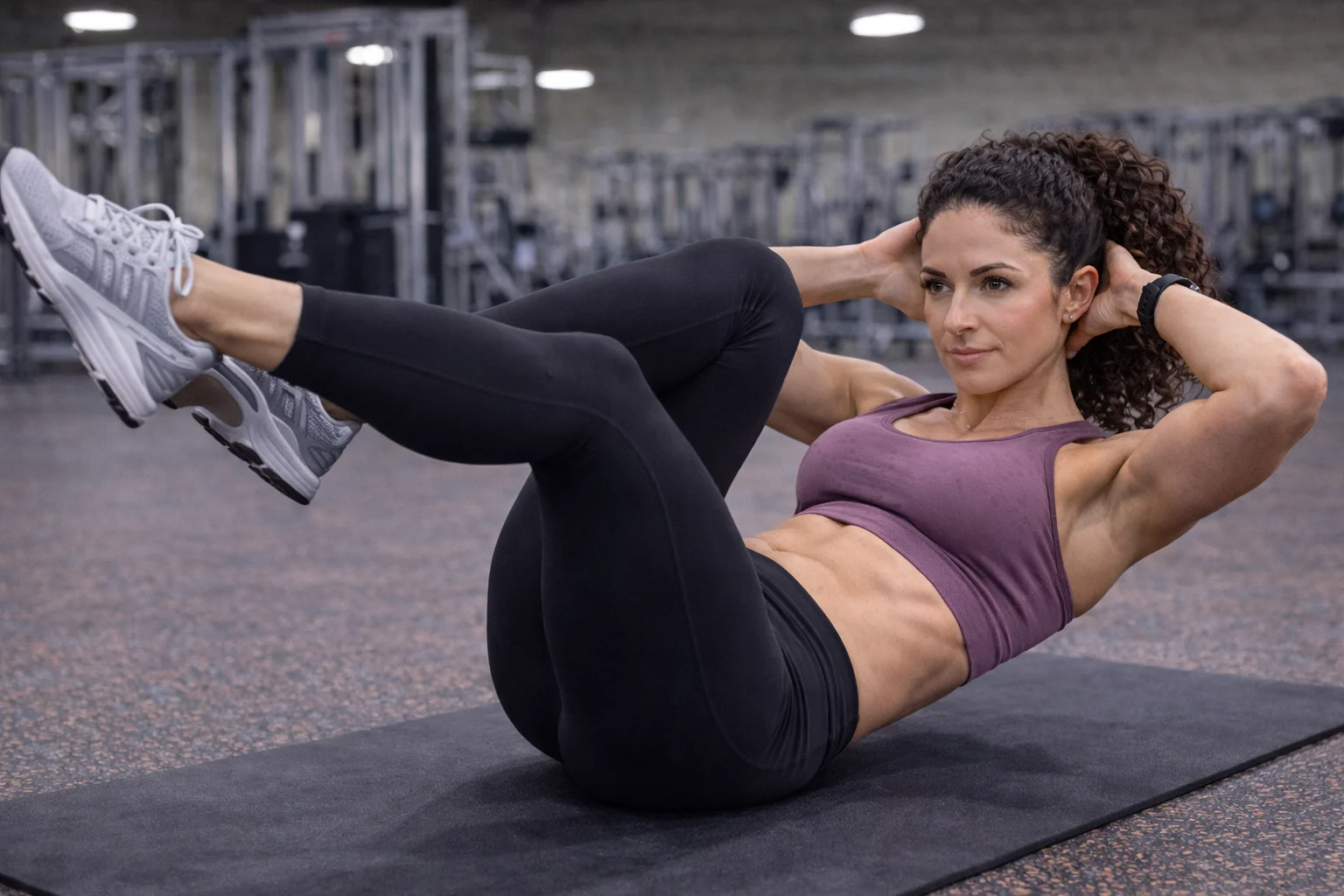
The Bicycle Crunch is a dynamic core exercise that targets both the rectus abdominis and obliques through a coordinated rotational movement pattern. This exercise combines spinal flexion with rotation, making it highly effective for developing complete abdominal strength and definition. The alternating leg and arm movement creates continuous tension while engaging multiple planes of motion for comprehensive core development.
Muscles Worked
Primary Muscles
- Rectus Abdominis
- External Obliques
- Internal Obliques
Secondary Muscles
- Hip Flexors
- Quadriceps
- Transverse Abdominis
How to Perform
-
1
Lie flat on your back on an exercise mat with your lower back pressed firmly into the floor. Place your hands lightly behind your head without interlacing your fingers, keeping your elbows wide.
-
2
Lift your legs off the ground and bend your knees to create a 90-degree angle at your hips and knees. This is your starting position with your shins parallel to the floor.
-
3
Engage your core and lift your shoulder blades off the ground by contracting your abdominals. Avoid pulling on your neck with your hands - they're only there for light support.
-
4
Simultaneously extend your right leg straight out at approximately 45 degrees while rotating your torso to bring your right elbow toward your left knee. Focus on rotating from your core, not just moving your elbow.
-
5
Immediately switch sides in a fluid pedaling motion, extending your left leg while bringing your left elbow toward your right knee. Move with control rather than momentum, emphasizing the rotation of your torso.
-
6
Continue alternating sides in a smooth, controlled pattern. Keep your shoulder blades elevated off the ground throughout the entire set to maintain constant tension on your abdominals.
-
7
Breathe rhythmically, exhaling as you crunch and rotate, inhaling as you transition between sides. Complete the desired number of repetitions, counting each knee-to-elbow touch as one rep.
Common Mistakes
-
Pulling on Your Neck
Yanking your head forward with your hands creates neck strain and removes work from your abs. Your hands should barely touch your head, providing only light support while your core does all the lifting.
-
Moving Too Fast
Racing through reps uses momentum instead of muscle contraction, significantly reducing the exercise's effectiveness. Slow, controlled movements with deliberate rotation maximize oblique engagement and core strength gains.
-
Bringing Elbow to Knee Instead of Rotating
Simply moving your elbow toward your knee without true torso rotation misses the oblique activation that makes this exercise valuable. Focus on rotating your entire ribcage, not just swinging your arm across your body.
-
Letting Your Lower Back Arch
Allowing space between your lower back and the floor transfers tension away from your abs and can strain your spine. Keep your lower back pressed flat throughout by maintaining strong core engagement.
Pro Tips
-
Perfect the Pause
Hold the peak contraction for one second when your elbow meets your knee before switching sides. This isometric hold dramatically increases time under tension and oblique activation without adding any equipment.
-
Think Shoulder to Hip, Not Elbow to Knee
Visualize bringing your shoulder toward the opposite hip rather than just touching elbow to knee. This mental cue encourages proper rotation and ensures your obliques fully engage during each repetition.
-
Keep Extended Leg Low
Lower the extended leg closer to the ground to increase difficulty and hip flexor engagement. However, only go as low as you can while keeping your lower back pressed firmly against the floor.
-
Quality Over Quantity
Fifteen slow, perfectly executed bicycle crunches with full rotation provide far more benefit than fifty sloppy, rushed repetitions. Prioritize controlled movement and complete range of motion over rep count.
Variations
Modify the bicycle crunch to match your fitness level or emphasize different aspects of core development with these effective variations.
-
Slow-Motion Bicycle Crunch
Take 3-4 seconds for each side of the movement. This tempo variation eliminates momentum completely and significantly increases time under tension for enhanced muscle development.
-
Weighted Bicycle Crunch
Hold a light medicine ball or weight plate at your chest while performing the movement. This increases resistance and demands greater core stability throughout the exercise.
-
Elevated Bicycle Crunch
Perform the exercise with your upper back on a decline bench. The angle increases the range of motion and resistance, creating a more challenging variation.
-
Modified Bicycle Crunch
Keep one foot on the floor while performing the crunch with the other leg. This beginner-friendly option reduces lower back stress while you build core strength.
Alternative Exercises
These exercises target similar muscle groups and movement patterns, providing excellent alternatives for varied core training.
-
Russian Twist
Seated with feet elevated, rotate your torso side to side. This movement emphasizes rotational core strength similar to bicycle crunches but from a different position.
-
Standing Oblique Crunch
Bring knee to elbow in a standing position. This vertical plane variation reduces lower back stress while still effectively targeting the obliques and rectus abdominis.
-
Cross-Body Mountain Climbers
From a plank position, drive your knee toward the opposite elbow. This dynamic variation combines core rotation with cardiovascular challenge and full-body engagement.
-
Side Plank with Rotation
From a side plank, rotate your torso and thread your top arm underneath. This isometric-dynamic combination challenges obliques through a similar rotational pattern.

Track Your Bicycle Crunch Progress
Log every set, track PRs, and watch your strength grow with replogr.
Join Beta