Pallof Press
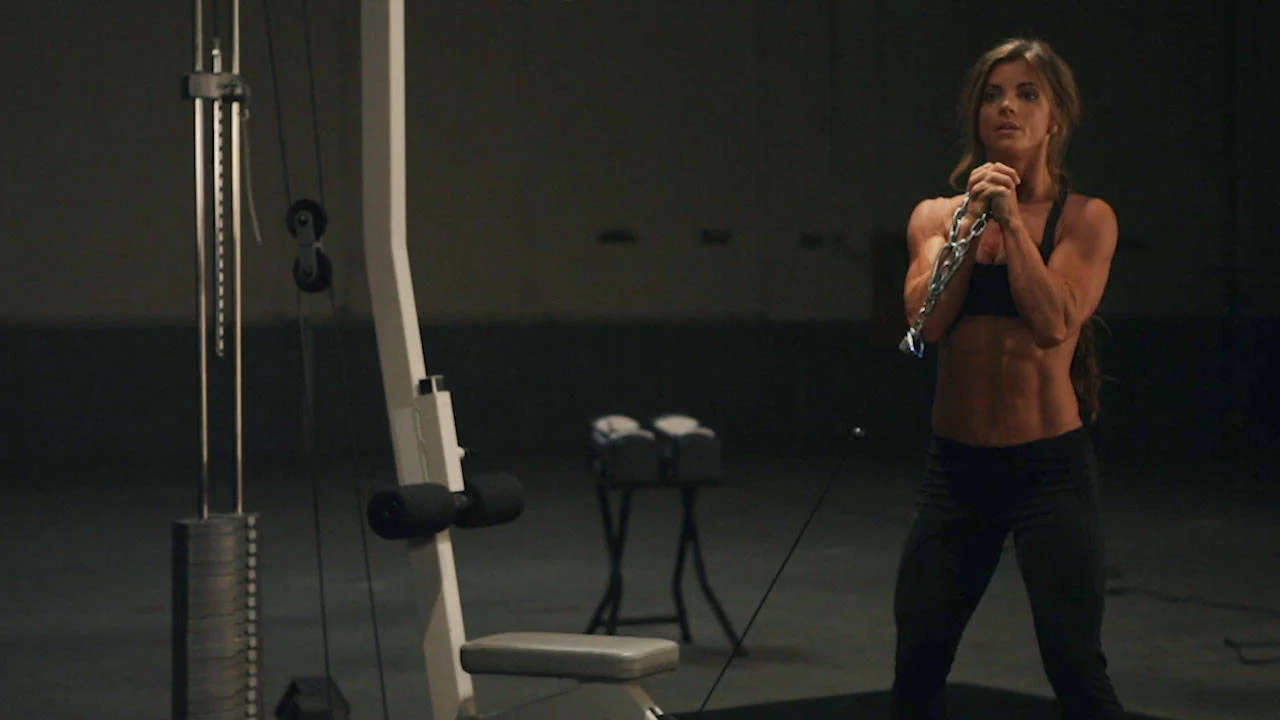
The Pallof Press is an anti-rotation core exercise that builds rotational stability by resisting lateral forces while maintaining a rigid torso position. This functional movement strengthens the deep stabilizers of the spine, improving athletic performance and reducing injury risk during rotational activities. Unlike traditional crunching movements, the Pallof Press teaches your core to resist unwanted motion, which is how it functions during most real-world activities.
Muscles Worked
Primary Muscles
- Obliques (Internal & External)
- Transverse Abdominis
- Rectus Abdominis
Secondary Muscles
- Glutes
- Shoulders (Stabilizers)
- Erector Spinae
How to Perform
-
1
Attach a resistance band or cable to a stable anchor point at chest height. Stand perpendicular to the anchor with your feet shoulder-width apart, positioning yourself far enough away to create moderate tension in the band.
-
2
Grasp the handle with both hands and bring it to the center of your chest. Your hands should be stacked, shoulders square, and the band pulling your torso toward the anchor point.
-
3
Engage your core by bracing as if preparing to take a punch. Create full-body tension from your feet through your torso, maintaining a tall, neutral spine position.
-
4
Press the handle straight out from your chest until your arms are fully extended. Keep your shoulders level and resist any rotation or side-bending caused by the lateral pull of the band.
-
5
Hold the extended position for 2-3 seconds, maintaining perfect alignment and resisting the rotational force. Your hips, shoulders, and feet should remain square throughout the hold.
-
6
Slowly return the handle to your chest with control, continuing to resist rotation. The eccentric phase is equally important for building core stability.
-
7
Complete all repetitions on one side before switching to face the opposite direction. Ensure you train both sides equally to develop balanced rotational stability.
Common Mistakes
-
Allowing Torso Rotation
Permitting your shoulders or hips to rotate defeats the anti-rotation purpose of the exercise. The goal is to resist rotational forces, not generate rotation. Keep your torso square to develop true rotational stability.
-
Using Too Much Resistance
Selecting excessive resistance compromises form and forces compensatory movement patterns. The Pallof Press is about quality control, not maximal load. Choose a resistance that challenges stability while allowing perfect technique.
-
Failing to Engage Glutes
Neglecting glute activation allows unwanted hip movement and reduces total-body tension. Squeeze your glutes throughout the exercise to create a stable base and enhance core-to-extremity force transfer.
-
Pressing Too Fast
Rapid pressing movements reduce stability demands and minimize core activation. Perform the movement slowly and deliberately to maximize muscle recruitment and develop better motor control.
Pro Tips
-
Create Total-Body Tension
Generate tension from the ground up by gripping the floor with your feet, engaging your quads, squeezing your glutes, and bracing your core. This full-body tension creates a more stable platform and enhances core activation.
-
Focus on Extended Position Hold
The fully extended position with arms straight creates maximum rotational stress. Hold this position for 2-3 seconds on each rep to maximize time under tension and build superior anti-rotation strength.
-
Breathe Behind the Shield
Maintain steady breathing without losing core tension by breathing into your sides and back rather than your belly. This "breathing behind the shield" technique preserves intra-abdominal pressure while ensuring adequate oxygen flow.
-
Progress Stance Before Resistance
Make the exercise harder by narrowing your stance or adopting a half-kneeling or tall-kneeling position before increasing resistance. These stance modifications challenge stability more effectively than simply adding more weight.
Variations
Challenge your core stability from different positions and angles with these Pallof Press variations.
-
Half-Kneeling Pallof Press
Perform from a half-kneeling position with the down knee closest to the anchor. This variation increases stability demands and challenges hip stability alongside core anti-rotation.
-
Tall-Kneeling Pallof Press
Execute from a tall kneeling position on both knees to create an extremely unstable base that demands maximum core engagement and eliminates lower body compensation.
-
Pallof Press with Overhead Reach
After pressing out, reach the handle overhead while maintaining anti-rotation. This progression adds an anti-extension component and increases the difficulty significantly.
-
Walking Pallof Press
Hold the extended position while walking forward and backward, creating a dynamic stability challenge that mimics real-world functional demands.
Alternative Exercises
Build anti-rotation strength and core stability with these alternative exercises.
-
Banded Anti-Rotation Hold
Static variation where you hold the extended position for time rather than performing repetitions, building isometric anti-rotation endurance and mental toughness.
-
Cable Chop
Rotational movement that trains controlled rotation rather than anti-rotation, building complementary rotational power and core strength through a diagonal movement pattern.
-
Single-Arm Farmer's Carry
Loaded carry that creates lateral instability requiring constant anti-lateral flexion and anti-rotation work while building grip strength and total-body stability.
-
Landmine Anti-Rotation Press
Similar anti-rotation demand using a landmine setup, offering variable resistance throughout the range of motion and requiring strict torso control.

Track Your Pallof Press Progress
Log every set, track PRs, and watch your strength grow with replogr.
Join Beta