Goblet Squat
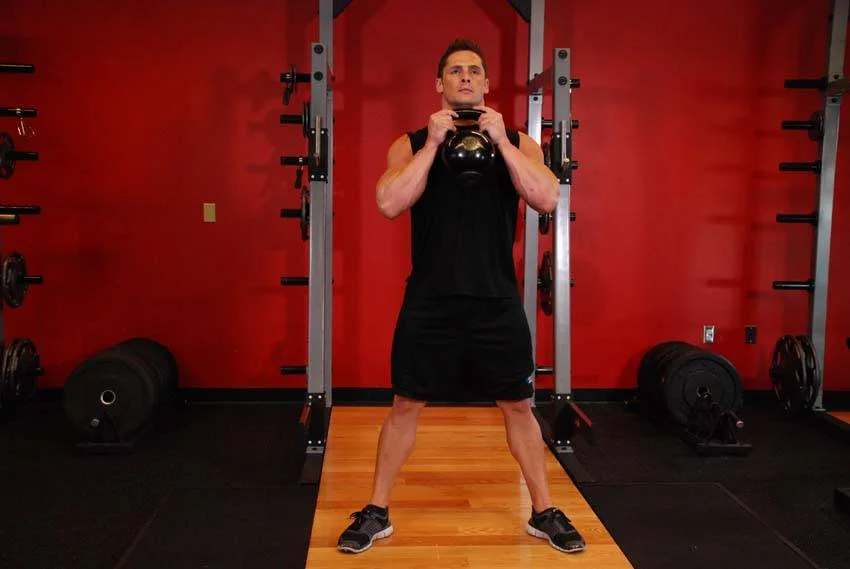
The Goblet Squat is a versatile compound exercise that builds lower body strength while teaching proper squat mechanics through its front-loaded position. Holding a dumbbell or kettlebell at chest height naturally promotes an upright torso and deep squat depth, making it ideal for beginners learning to squat and advanced lifters working on mobility. This exercise effectively targets the quads, glutes, and core while improving hip flexibility and balance.
Muscles Worked
Primary Muscles
- Quadriceps
- Glutes
Secondary Muscles
- Core (Abs and Obliques)
- Hamstrings
- Adductors
How to Perform
-
1
Hold a dumbbell or kettlebell vertically at chest height with both hands cupping the top end. Your elbows should point down and the weight should rest against your sternum.
-
2
Stand with feet slightly wider than shoulder-width apart, toes angled outward 15-30 degrees. Engage your core and pull your shoulders back to establish a proud chest position.
-
3
Initiate the descent by pushing your hips back and bending your knees simultaneously. Keep the weight close to your body and maintain an upright torso throughout the movement.
-
4
Descend until your elbows touch the inside of your knees or your thighs reach parallel to the floor. Your knees should track in line with your toes, pushing outward slightly.
-
5
Pause briefly at the bottom position while maintaining tension and balance. Keep your chest up and avoid rounding your lower back.
-
6
Drive through your heels and midfoot to return to standing, pushing your knees outward and squeezing your glutes at the top. Exhale as you rise and maintain the weight position at your chest.
Common Mistakes
-
Knees Caving Inward
Allowing the knees to collapse inward places dangerous stress on the knee joints and reduces glute activation. Always push your knees outward in alignment with your toes throughout the movement.
-
Rounding the Lower Back
Letting your lower back round at the bottom (butt wink) can lead to spinal injury. Maintain a neutral spine by bracing your core and only descending as low as your mobility allows.
-
Lifting Heels Off the Ground
Rising onto your toes shifts weight forward and reduces stability. Keep your heels planted firmly throughout the entire movement to maintain balance and maximize posterior chain engagement.
-
Shallow Squat Depth
Failing to reach adequate depth limits muscle activation and range of motion benefits. Aim to descend until your elbows touch your knees or thighs reach at least parallel.
Pro Tips
-
Use Your Elbows as a Guide
Drive your elbows between your knees as you descend to encourage proper depth and hip mobility. This cue naturally opens your hips and promotes a more upright torso position.
-
Perfect for Warm-Ups
Perform goblet squats with lighter weight at the start of leg workouts to activate muscles, improve mobility, and groove proper squat mechanics before heavier lifts.
-
Focus on Tempo
Control the descent for 2-3 seconds, pause at the bottom for 1 second, then drive up explosively. This tempo maximizes time under tension and builds exceptional quad strength.
-
Experiment with Stance Width
Adjust your stance width to find what feels most comfortable and allows the deepest squat. A wider stance often works better for taller lifters or those with limited ankle mobility.
Variations
Challenge yourself with these goblet squat variations that add complexity and training stimulus:
-
Paused Goblet Squat
Hold the bottom position for 3-5 seconds to build strength at the weakest point and improve mobility through extended time under tension.
-
Goblet Squat Pulse
Perform small pulsing movements at the bottom of the squat to create metabolic stress and intense quad burn for hypertrophy.
-
Goblet Box Squat
Squat down to a box or bench to establish consistent depth and build confidence, especially useful for beginners learning proper form.
-
Elevated Goblet Squat
Place small plates or a wedge under your heels to reduce ankle mobility requirements and increase quad emphasis during the movement.
Alternative Exercises
Try these alternative exercises that provide similar lower body development with different loading patterns:
-
Front Squat
Barbell variation with similar front-loaded mechanics that allows for heavier weight and greater overall strength development.
-
Bulgarian Split Squat
Unilateral exercise that challenges balance and addresses muscle imbalances while providing intense quad and glute activation.
-
Hack Squat
Machine-based squat variation that supports your back and allows for heavier loading with reduced stabilization requirements.
-
Zercher Squat
Hold the barbell in the crook of your elbows for another front-loaded squat variation that builds tremendous core strength.

Track Your Goblet Squat Progress
Log every set, track PRs, and watch your strength grow with replogr.
Join Beta