Hip Abduction
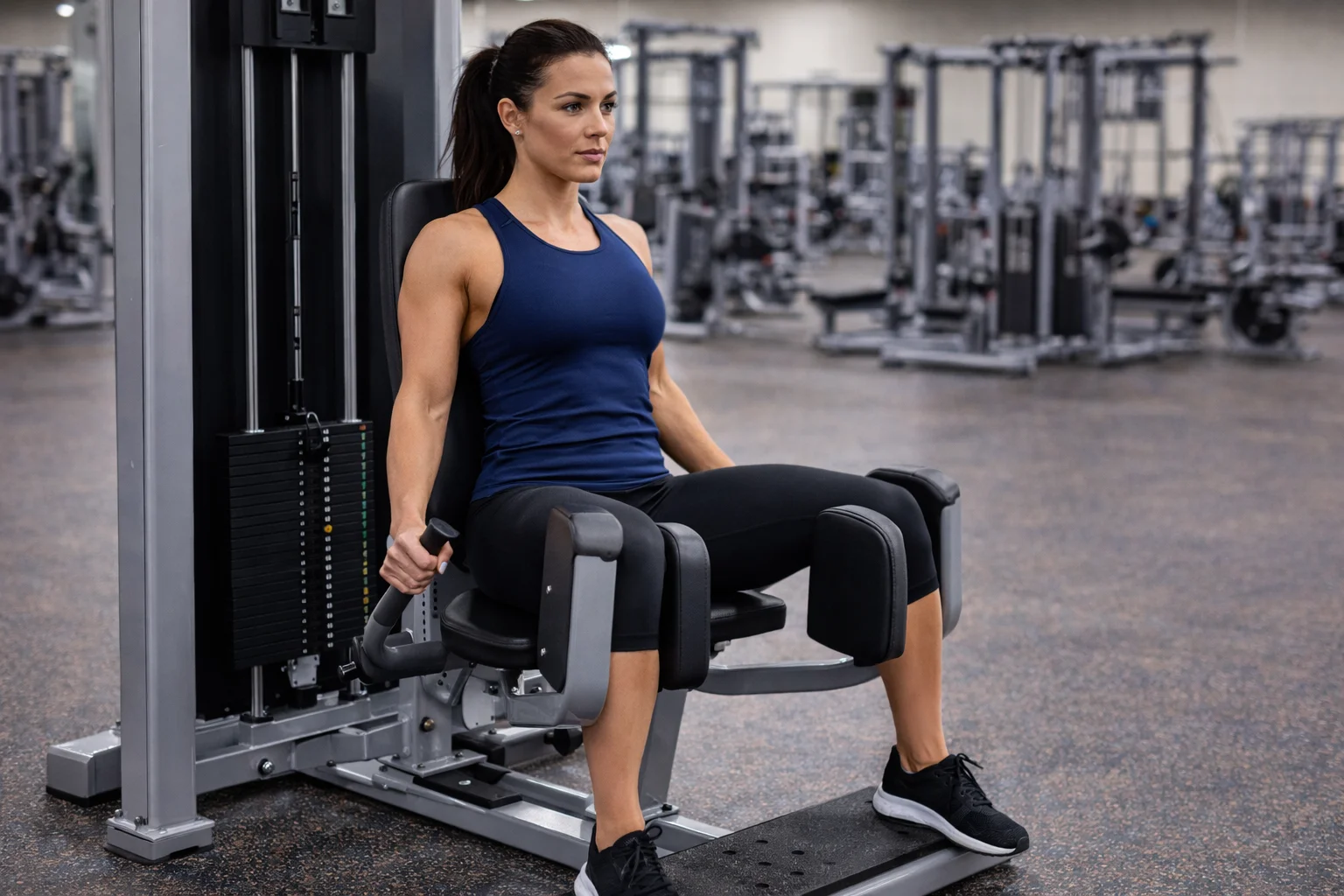
Hip abduction is a fundamental movement for building strong, stable glutes and hips. By pushing your legs outward against resistance, you target the gluteus medius and minimus—critical muscles for hip stability, injury prevention, and athletic performance. Whether performed on a machine, with bands, or cables, hip abduction strengthens the often-neglected outer glutes that are essential for balanced lower body development.
Muscles Worked
Primary Muscles
- Gluteus Medius
- Gluteus Minimus
Secondary Muscles
- Tensor Fasciae Latae (TFL)
- Gluteus Maximus (Upper Fibers)
- Core Stabilizers
How to Perform (Machine Version)
-
1
Setup: Sit in the hip abduction machine with your back firmly against the pad. Position the outer thigh pads against the outside of each leg, typically just above your knees. Adjust the starting width so your legs begin close together—some machines require you to push the pads inward to the starting position.
-
2
Starting Position: Sit upright with your core engaged and maintain a neutral spine throughout the movement. Grip the handles beside the seat for stability. Keep your feet flat on the footrests if provided, or place them firmly on the floor. Your knees should be at roughly 90 degrees.
-
3
Push Out: Exhale and push your legs outward against the resistance, driving through your outer thighs and glutes. Move in a smooth, controlled motion—no explosive jerking. Push your legs as wide as comfortably possible while maintaining good form and keeping your back against the pad.
-
4
Peak Contraction: At the fully abducted position, pause for 1-2 seconds and squeeze your glutes hard. Feel the contraction in the outer glutes—this is where the muscle-building magic happens. Don't just go through the motions; consciously activate the glute medius at the top of each rep.
-
5
Return with Control: Inhale and slowly bring your legs back to the starting position under control—don't let the weight stack slam. Resist the return motion to maximize time under tension. The negative portion builds as much strength as the push-out phase, so don't rush it.
-
6
Repeat: Without pausing at the bottom, smoothly transition into your next repetition. Maintain constant tension on your glutes throughout the entire set. Focus on quality contractions rather than heavy weight or high speed—this is a precision exercise.
Common Mistakes
-
Using Momentum
Swinging or jerking your legs outward takes tension off the glutes and reduces effectiveness. Move deliberately and smoothly, controlling both the push-out and the return. If you need momentum, the weight is too heavy.
-
Leaning Forward or Back
Losing neutral spine position shifts emphasis away from the glutes and can strain your back. Keep your torso upright and back firmly against the pad throughout the entire movement. Your core should remain braced.
-
Partial Range of Motion
Not pushing out fully or starting from a too-wide position limits muscle activation. Start with legs close together and push as wide as comfortable. Full range equals full development—don't short-change your glutes.
-
Going Too Heavy
The glute medius is a smaller muscle that responds better to moderate weight and controlled reps than ego-lifting. Using excessive weight forces compensation patterns and reduces glute activation. Focus on the squeeze, not the stack.
Pro Tips
-
Prioritize Mind-Muscle Connection
Hip abduction is all about feeling the glute medius work. Before each set, consciously think about contracting your outer glutes. Place your hands on the side of your hips to feel the muscle activate. This awareness dramatically improves results.
-
Use Higher Rep Ranges
The glute medius responds exceptionally well to higher reps (12-20 per set). Use moderate weight that allows perfect form and a strong squeeze at the top. Burn out those outer glutes with volume rather than maximal loads.
-
Incorporate as a Warm-Up
Perform 2-3 light sets of hip abduction before squats or deadlifts to activate your glute medius. This "glute primer" improves hip stability during compound movements and reduces knee valgus (knee cave), enhancing both performance and injury prevention.
-
Try Unilateral Variations
Standing cable or band abductions work one leg at a time, forcing greater core stabilization and revealing strength imbalances. Single-leg work is more functional and transfers better to athletic movements like running and cutting.
Variations
Standing Cable Abduction
Ankle strap attached to low cable, push leg out to side while standing on opposite leg.
Banded Lateral Walk
Resistance band around thighs or ankles, walk sideways maintaining tension throughout.
Side-Lying Hip Abduction
Lie on side, lift top leg toward ceiling for bodyweight glute medius isolation.
Seated Band Abduction
Loop band around thighs while seated, push knees outward against resistance.
Alternatives
Clamshells
Lying on side with knees bent and feet together, open top knee while keeping feet stacked.
Fire Hydrants
On hands and knees, lift bent knee out to side for glute medius and hip stabilizer activation.
Monster Walks
Band around ankles or thighs, walk forward and sideways maintaining wide stance throughout.
Single-Leg Romanian Deadlift
Unilateral hip hinge requires intense glute medius stabilization to prevent hip rotation.
Related Leg Exercises

Track Your Hip Abduction Progress
Log every set, track your personal records, and watch your glute strength grow with replogr. The offline workout tracker built for serious lifters.
Download replogr.