Walking Lunge
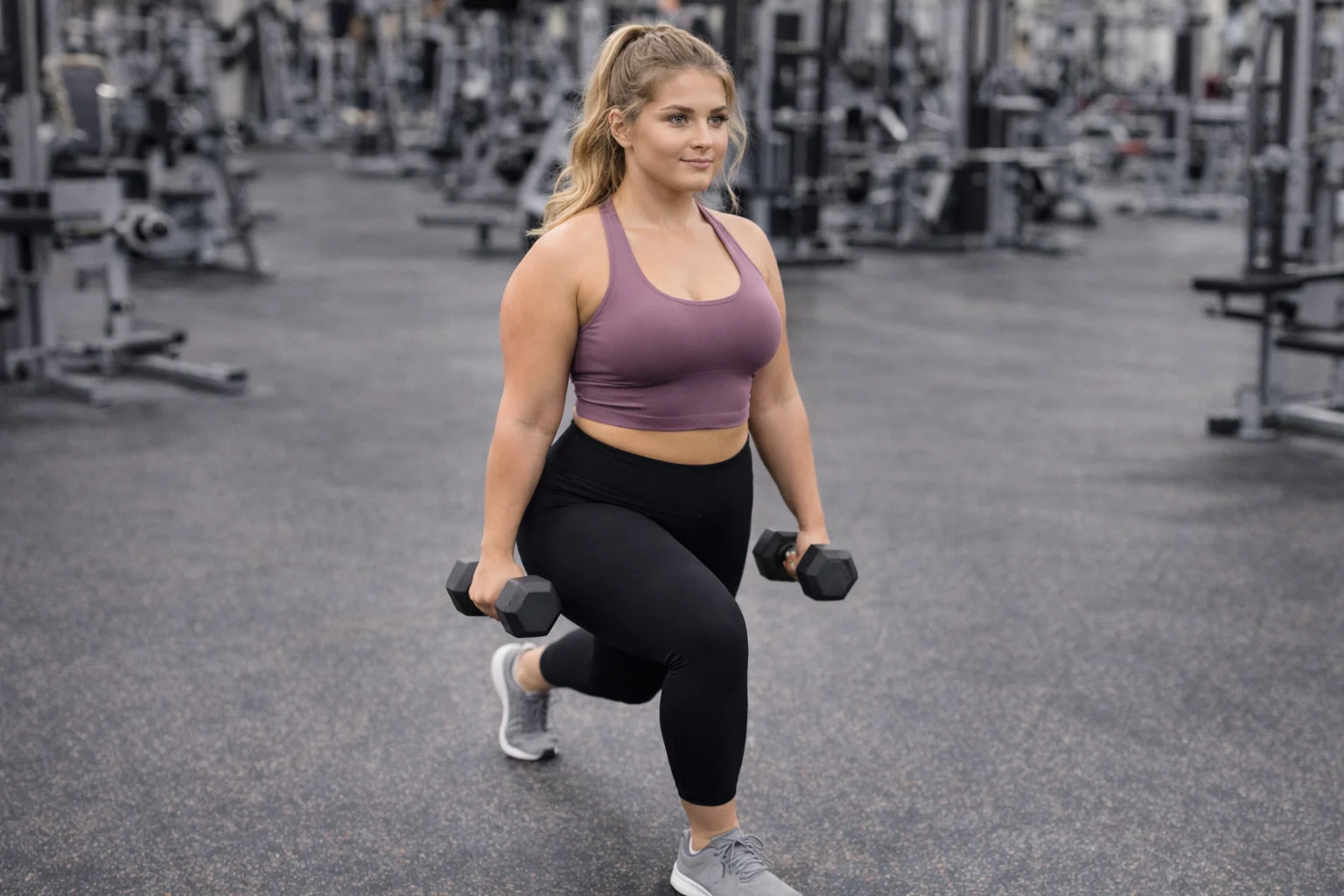
The walking lunge is a dynamic unilateral exercise that builds leg strength, balance, and coordination. By stepping forward with alternating legs, you work your quads and glutes intensely while improving hip stability and core control. It's ideal for developing symmetrical leg strength and correcting muscle imbalances.
Muscles Worked
Primary Muscles
- Quadriceps
- Gluteus Maximus
- Hamstrings
Secondary Muscles
- Core (Stabilization)
- Calves
- Hip Stabilizers
How to Perform
-
1
Starting Position: Stand tall with feet hip-width apart, holding dumbbells at your sides with arms fully extended. Engage your core, pull your shoulders back, and look straight ahead. Keep your chest up and maintain an upright torso throughout the movement.
-
2
Step Forward: Take a controlled step forward with your right leg, landing heel-first. The step should be long enough that when you lower down, both knees form approximately 90-degree angles. Keep your torso upright and don't lean forward excessively.
-
3
Lower Down: Bend both knees to lower your hips straight down until your rear knee hovers just above the ground. Your front knee should track over your toes, not caving inward. The front shin should be nearly vertical. Keep your weight distributed through the heel and midfoot of your front leg.
-
4
Drive Up and Through: Push forcefully through your front heel to stand up, then immediately bring your rear leg forward into the next lunge. Don't pause between reps—flow smoothly from one lunge into the next, alternating legs with each step. Maintain rhythm and balance throughout.
-
5
Continue Walking: Keep moving forward, alternating legs with each step. Maintain consistent stride length and tempo. Your torso should stay upright with minimal forward lean. Focus on smooth, controlled movement rather than speed. Complete the desired number of reps per leg or distance.
Common Mistakes
-
Step Too Short
Taking a short step causes your front knee to travel too far over your toes, putting excessive stress on the knee joint. Step far enough so your front shin stays vertical when you lower down into the lunge position.
-
Knee Caving Inward
Allowing your front knee to collapse inward (valgus collapse) puts dangerous stress on the knee ligaments. Keep your knee tracking in line with your second and third toes throughout the entire movement. Push outward slightly to maintain proper alignment.
-
Leaning Forward Excessively
Tilting your torso too far forward shifts weight onto your front knee and reduces glute activation. Keep your chest up and torso relatively upright. A slight forward lean is natural, but excessive lean indicates weak core or improper weight selection.
-
Rear Knee Slamming Down
Dropping your rear knee forcefully to the ground risks injury and shows poor control. Lower yourself with control, gently touching your rear knee to the ground or hovering just above it. The movement should be smooth and deliberate, not a collapse.
Pro Tips
-
Master Bodyweight First
Perfect your form with bodyweight only before adding dumbbells. Walking lunges require significant balance and coordination. Once you can perform 20+ smooth reps per leg with good form, gradually add light weights and progress from there.
-
Drive Through Your Heel
Focus on pushing through the heel of your front foot to maximize glute and hamstring activation. If you feel the burn mainly in your quads, you're likely pushing through your toes instead. Shift your weight back slightly and drive through the heel for better muscle balance.
-
Maintain Consistent Tempo
Walk at a steady pace rather than pausing between reps. Continuous movement challenges your balance and coordination while keeping tension on your muscles. A consistent rhythm also improves functional carryover to sports and daily activities requiring dynamic movement.
-
Use for Finishers
Walking lunges work exceptionally well as a workout finisher after heavy squats or leg presses. Use lighter weights and higher reps (15-20 per leg) to accumulate volume and create a powerful metabolic stimulus for growth. The continuous movement creates an intense pump and burn.
Variations
Reverse Lunge
Step backward instead of forward, easier on knees and better for beginners.
Deficit Lunge
Front foot on platform increases range of motion and glute/quad stretch.
Barbell Walking Lunge
Bar across back allows heavier loads and builds full-body stability.
Overhead Lunge
Weight held overhead challenges core stability and shoulder mobility.
Alternatives
Step Up
Similar unilateral movement with stable platform, easier to balance.
Bulgarian Split Squat
Rear foot elevated unilateral squat with greater quad and glute activation.
Back Squat
Bilateral compound movement for overall leg development with heavier loads.
Leg Press
Machine-based alternative that removes balance requirements and spinal loading.
Related Leg Exercises

Track Your Walking Lunge Progress
Log every set, track your personal records, and watch your strength grow with replogr. The offline workout tracker built for serious lifters.
Download replogr.