Cable External Rotation
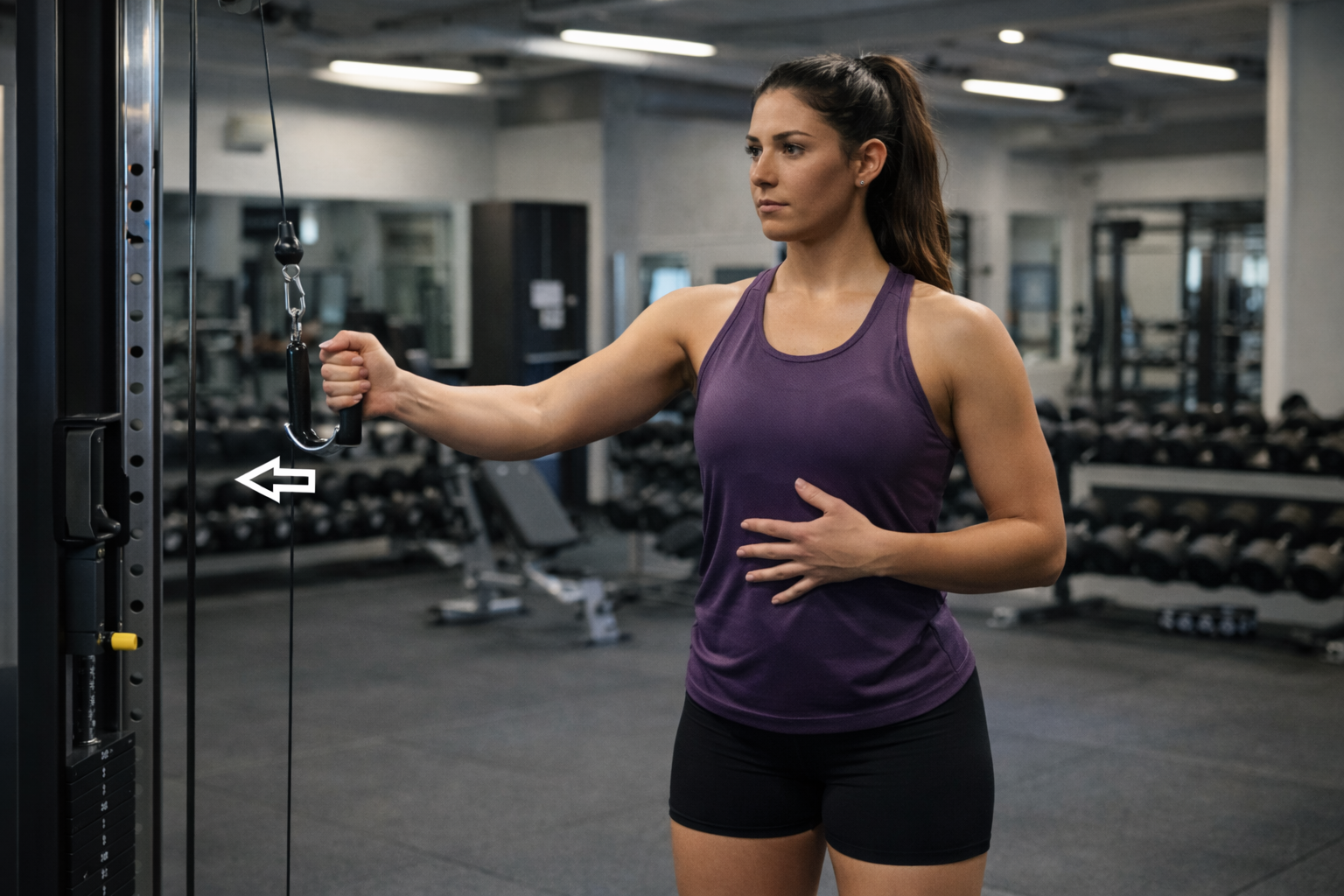
Essential rotator cuff exercise for shoulder health, injury prevention, and fixing internal rotation dominance from pressing movements.
Muscles Worked
Primary Muscles
- Infraspinatus
- Teres Minor
Secondary Muscles
- Posterior Deltoid
- Supraspinatus
How to Perform
-
1
Setup: Set cable to elbow height. Attach D-handle. Stand sideways to machine with working arm closer to cable. Place small towel or pad between elbow and ribs. This keeps elbow tucked at 90°.
-
2
Starting Position: Grab handle with working arm. Elbow bent 90°, tucked against towel/side. Forearm across body pointing toward opposite hip. Shoulder packed and stable. Core engaged.
-
3
Rotate: Keep elbow glued to side. Rotate forearm outward away from body. Move ONLY at shoulder joint—elbow stays 90° and pinned to ribs. Slow, controlled rotation. No compensation from torso.
-
4
End Position: Rotate out to approximately 45-60° from body. Feel contraction in back of shoulder. Pause briefly. Don't over-rotate past comfortable range—quality over range.
-
5
Return: Control cable back to starting position over 2-3 seconds. Maintain elbow position throughout. Keep tension—don't let cable snap back. Repeat for 12-20 reps per side with perfect form.
Common Mistakes
Elbow Drifting Away From Body
When elbow leaves your side, the movement becomes a lateral raise instead of external rotation. Keep elbow pinned to ribs with towel/pad throughout entire set.
Using Too Much Weight
Heavy weight forces compensation patterns and reduces rotator cuff isolation. Use very light weight—5-15 lbs is plenty. This is NOT a strength exercise.
Rotating Torso Instead of Shoulder
Twisting body to move weight defeats the purpose. Rotation must come purely from shoulder joint. Keep torso completely stable—pin yourself against wall if needed.
Moving Too Fast
Speed reduces time under tension and rotator cuff activation. Use slow, deliberate tempo: 2 seconds out, 1 second hold, 3 seconds back. Control is everything.
Training Notes
Cable External Rotation is safest when the ribs stay down and the shoulder blades glide naturally. Avoid excessive arching by tightening the glutes and keeping the pelvis stacked. A neutral wrist and elbows slightly in front of the body keep the press in a strong, shoulder‑friendly line.
Use a controlled lowering phase to build stability. A 2–3 second eccentric helps the delts do the work rather than the traps. If you feel pinching, reduce range slightly and keep the elbows from drifting too far behind the body.
For hypertrophy, aim for 3–4 sets of 8–15 reps, leaving 1–2 reps in reserve. For strength, keep reps lower (5–8) and focus on crisp technique. Rest 90–150 seconds for moderate loads; longer for heavier sets.
If the traps take over, lower the load and think about “shoulders down and wide.” A slightly wider grip can reduce internal rotation stress during upright‑row type patterns. For raises, stop at shoulder height to avoid unnecessary joint strain.
Pair Cable External Rotation with a rear‑delt or external‑rotation movement to balance the shoulder. A simple combo is a press plus face pulls or rear‑delt flyes. Over time, track reps and load while keeping the same smooth tempo.
Warm up with 1–2 lighter sets and some shoulder mobility before heavy work. Small adjustments—seat height, grip width, or range—can make a big difference in comfort and deltoid activation.
Pro Tips
-
Use a Towel Between Elbow and Ribs
Rolling up small towel and pinning it between elbow and side creates tactile feedback. If towel drops, you know elbow drifted and form broke down.
-
Cable Over Bands Initially
Cables provide more consistent tension than bands, making them better for learning proper movement pattern. Progress to bands later for convenience and portability.
-
High Reps, Perfect Form
Do 15-20 reps per set with flawless technique. Rotator cuff muscles respond better to higher rep ranges with lighter loads than heavy, low-rep training.
-
Essential for Pressing Athletes
If you bench press, overhead press, or do lots of pushing, external rotations are mandatory. They balance out internal rotation dominance and prevent shoulder impingement.
Variations
Band External Rotation
Portable rotator cuff work using resistance bands.
Dumbbell External Rotation
Free weight variation lying on side.
Alternative Exercises
Face Pull
Works rotator cuff with rear delt emphasis.
Cuban Press
Advanced rotator cuff exercise.

Track Your Shoulder Health Progress
Log every set, track your rotator cuff work, and build bulletproof shoulders with replogr. — the 100% offline workout tracker.
Join Beta