Front Raise
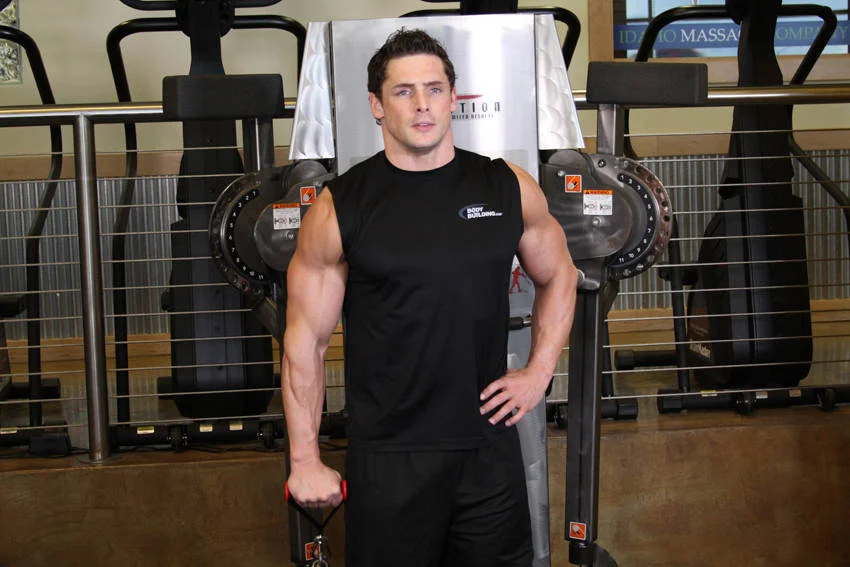
The Front Raise is a classic isolation exercise that directly targets the anterior deltoids, building impressive front shoulder development and upper chest definition. This simple yet effective movement can be performed with dumbbells, barbells, cables, or plates, making it accessible for any training environment. Front raises are essential for creating well-rounded shoulders and enhancing performance in all pressing movements.
Muscles Worked
Primary Muscles
- Anterior Deltoids
- Upper Pectoralis Major (Clavicular Head)
Secondary Muscles
- Lateral Deltoids
- Serratus Anterior
- Upper Trapezius
How to Perform
-
1
Stand with feet shoulder-width apart, holding a dumbbell in each hand with an overhand grip (palms facing your thighs). Keep your arms straight with just a slight bend in your elbows to avoid joint stress.
-
2
Position the dumbbells in front of your thighs, maintaining a neutral spine with your chest up and shoulders back. Engage your core to stabilize your torso throughout the movement.
-
3
Without using momentum or swinging your body, raise both dumbbells directly in front of you. Keep the weights close together throughout the movement and maintain the fixed elbow angle.
-
4
Continue lifting until the dumbbells reach shoulder height or slightly above, creating a line parallel to the floor with your arms. Avoid going significantly higher as this recruits more trapezius and less front delt.
-
5
At the top of the movement, pause briefly to maximize the contraction in your front delts. Focus on feeling the tension in the front of your shoulders.
-
6
Lower the dumbbells back down with control to the starting position in a smooth, controlled motion. Take 2-3 seconds for the descent to maximize time under tension.
-
7
Repeat for the desired number of repetitions without resting the weights against your thighs. Exhale as you lift and inhale as you lower.
Common Mistakes
-
Using Momentum and Body Swing
Leaning back and using your entire body to swing the weights up completely defeats the purpose of this isolation exercise. The front delts are already heavily worked during all pressing movements, so they need strict form and lighter weights to see additional growth. If you must use momentum, the weight is too heavy and you're wasting your time.
-
Lifting Too High
Raising the dumbbells significantly above shoulder height transfers tension from the anterior deltoids to the upper trapezius muscles. The optimal range is to shoulder height or just slightly above. Going higher doesn't increase front delt activation but does increase injury risk to the shoulder joint.
-
Shrugging the Shoulders
Elevating your shoulders and involving the traps diminishes front delt recruitment. Keep your shoulders down and back throughout the movement. Think about keeping your shoulder blades depressed and your neck long. The movement should originate purely from shoulder flexion, not shoulder elevation.
-
Bending the Elbows During the Movement
Changing your elbow angle during the raise transforms it into an upright row variation and recruits different muscles. Maintain a fixed, slight bend in your elbows from start to finish. The angle should remain constant throughout the entire set to ensure proper isolation of the front delts.
Pro Tips
-
Consider if You Really Need Front Raises
The anterior deltoids are heavily activated during all pressing movements like bench press, overhead press, and incline press. For most lifters, front raises may be unnecessary or even counterproductive, leading to overtraining of the front delts and shoulder imbalances. Prioritize rear and lateral delt work instead, which are typically underdeveloped relative to front delts.
-
Try Alternating Arms
Instead of lifting both dumbbells simultaneously, alternate between left and right arms. This reduces fatigue, allows better focus on each contraction, and helps prevent using momentum. Alternating also engages your core more as it has to stabilize against the shifting weight.
-
Use Cables for Constant Tension
Cable front raises provide continuous tension throughout the entire range of motion, unlike dumbbells where tension drops at the top. Stand with your back to a low pulley, grab the handle between your legs, and perform the raise. The constant resistance creates superior muscle stimulation.
-
Experiment with Grip Variations
Try different grip positions to target the front delts from various angles. Neutral grip (palms facing each other) tends to be more comfortable for many lifters and can reduce shoulder stress. You can also use a plate, barbell, or EZ-bar for different stimulus and variation in your training.
Variations
Keep your front delt training fresh with these effective variations that target the anterior shoulders from different angles.
-
Alternating Dumbbell Front Raise
Raise one arm at a time in an alternating fashion. This allows for better concentration on each rep and reduces the temptation to use momentum, while also engaging your core for rotational stability.
-
Barbell Front Raise
Use a barbell with an overhand grip to perform the movement. This variation allows you to load more weight and can be easier to control than dumbbells, making it ideal for strength-focused training.
-
Plate Front Raise
Hold a weight plate with both hands at the 3 and 9 o'clock positions and raise it to shoulder height. This creates a unique grip challenge and is particularly effective for higher-rep burnout sets.
-
Cable Front Raise
Perform the exercise using a low cable pulley for constant tension throughout the movement. The resistance curve remains consistent from start to finish, providing superior muscle activation compared to free weights.
Alternative Exercises
These exercises provide similar anterior deltoid stimulation and can replace front raises in your shoulder training program.
-
Overhead Press
A compound movement that heavily involves the front delts while also recruiting the lateral delts and triceps. This is generally a superior choice for most lifters as it provides more overall shoulder development and functional strength.
-
Incline Bench Press
Emphasizes the upper chest and front delts with a compound pressing motion. The inclined angle dramatically increases anterior deltoid recruitment compared to flat pressing.
-
Arnold Press
A unique dumbbell pressing variation that involves rotation, hitting the front delts through an extended range of motion while also engaging the lateral delts.
-
Upright Row
While controversial due to potential shoulder impingement risks, upright rows do target the front and lateral delts along with the traps. Use a wider grip and don't pull too high to minimize shoulder stress.

Track Your Front Raise Progress
Log every set, track PRs, and watch your strength grow with replogr.
Join Beta