Lean-Away Lateral Raise
Unilateral lateral raise variation that increases range of motion by leaning away from the working side for enhanced medial deltoid activation.
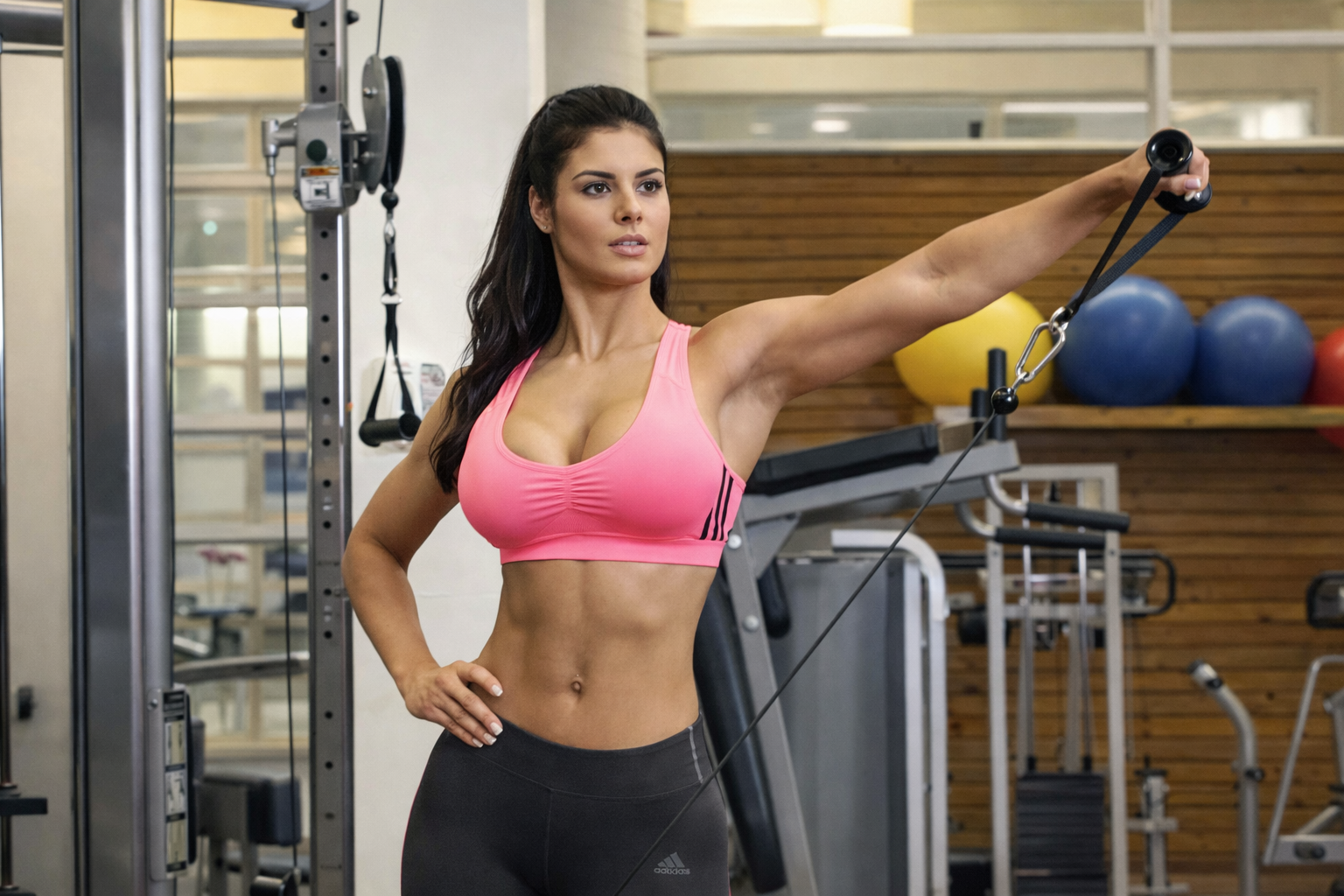
Muscles Worked
Primary Muscles
- Medial deltoid (lateral head)
Secondary Muscles
- Anterior deltoid
- Supraspinatus
- Upper trapezius
- Core stabilizers
How to Perform
-
1
Stand next to a sturdy vertical support (power rack, pole, or cable machine). Grab the support with your non-working hand at approximately shoulder height.
-
2
Hold a dumbbell in your working hand and lean your body away from the support, creating approximately a 15-20° angle. Keep your core tight to maintain this position.
-
3
From the hanging position (dumbbell starts slightly across your body), raise the dumbbell laterally until your arm is parallel to the floor or slightly above.
-
4
Keep your elbow slightly bent (10-15°) and lead with your elbow, not your hand. The dumbbell should follow an arc path away from your body.
-
5
Lower the weight with control back to the starting position. The dumbbell should cross slightly in front of your body at the bottom for maximum stretch.
Common Mistakes
Not leaning enough
A slight lean defeats the purpose. You should feel a noticeable stretch at the bottom of each rep.
Using momentum
Swinging the weight or using body english eliminates the benefit of the extended range. Control is key.
Shrugging shoulders
Keep your shoulder blade down and back. The movement should be pure shoulder abduction.
Too much weight
This variation is harder than standard lateral raises. Drop the weight by 20-30% from what you'd use standing.
Pro Tips
-
Extended ROM advantage
The lean allows the dumbbell to cross your midline at the bottom, adding 20-30° of extra range compared to standard raises.
-
Core engagement
Your obliques and core work hard to maintain the lean position. This makes it a great multi-benefit exercise.
-
Tempo matters
Use a 2-1-3 tempo (2 seconds up, 1 second pause, 3 seconds down) to maximize time under tension.
-
Perfect for finishers
This variation works excellently as a shoulder finisher with lighter weight and higher reps (15-20).
Training Notes
Lean-Away Lateral Raise is safest when the ribs stay down and the shoulder blades glide naturally. Avoid excessive arching by tightening the glutes and keeping the pelvis stacked. A neutral wrist and elbows slightly in front of the body keep the press in a strong, shoulder‑friendly line.
Use a controlled lowering phase to build stability. A 2–3 second eccentric helps the delts do the work rather than the traps. If you feel pinching, reduce range slightly and keep the elbows from drifting too far behind the body.
For hypertrophy, aim for 3–4 sets of 8–15 reps, leaving 1–2 reps in reserve. For strength, keep reps lower (5–8) and focus on crisp technique. Rest 90–150 seconds for moderate loads; longer for heavier sets.
If the traps take over, lower the load and think about “shoulders down and wide.” A slightly wider grip can reduce internal rotation stress during upright‑row type patterns. For raises, stop at shoulder height to avoid unnecessary joint strain.
Pair Lean-Away Lateral Raise with a rear‑delt or external‑rotation movement to balance the shoulder. A simple combo is a press plus face pulls or rear‑delt flyes. Over time, track reps and load while keeping the same smooth tempo.
Warm up with 1–2 lighter sets and some shoulder mobility before heavy work. Small adjustments—seat height, grip width, or range—can make a big difference in comfort and deltoid activation.
A slight scapular‑plane angle (about 30° forward of the body) is usually the most shoulder‑friendly for presses and raises. If your joint feels irritated, reduce range and keep the elbows slightly forward.
For lateral raises, think “long arms and soft elbows,” and stop when the hands reach shoulder height. Heavier weights tend to shift the work to the traps, so keep the load moderate and focus on tempo.
Variations
Cable lean-away raise
Constant tension throughout the entire range of motion.
Seated lean-away raise
Reduces ability to use momentum, increases difficulty.
Standing single-arm raise
Standard unilateral version without the lean.
Alternatives
Standard dumbbell lateral raise
Classic bilateral version with simpler form.
Cable lateral raise
Consistent resistance profile throughout movement.
Machine lateral raise
Fixed path for beginners or when fatigued.

Track Your Lean-Away Lateral Raise Progress
Log every set, track your personal records, and watch your strength grow with replogr. The offline workout tracker built for serious lifters.
Download replogr.