Leaning Cable Lateral Raise
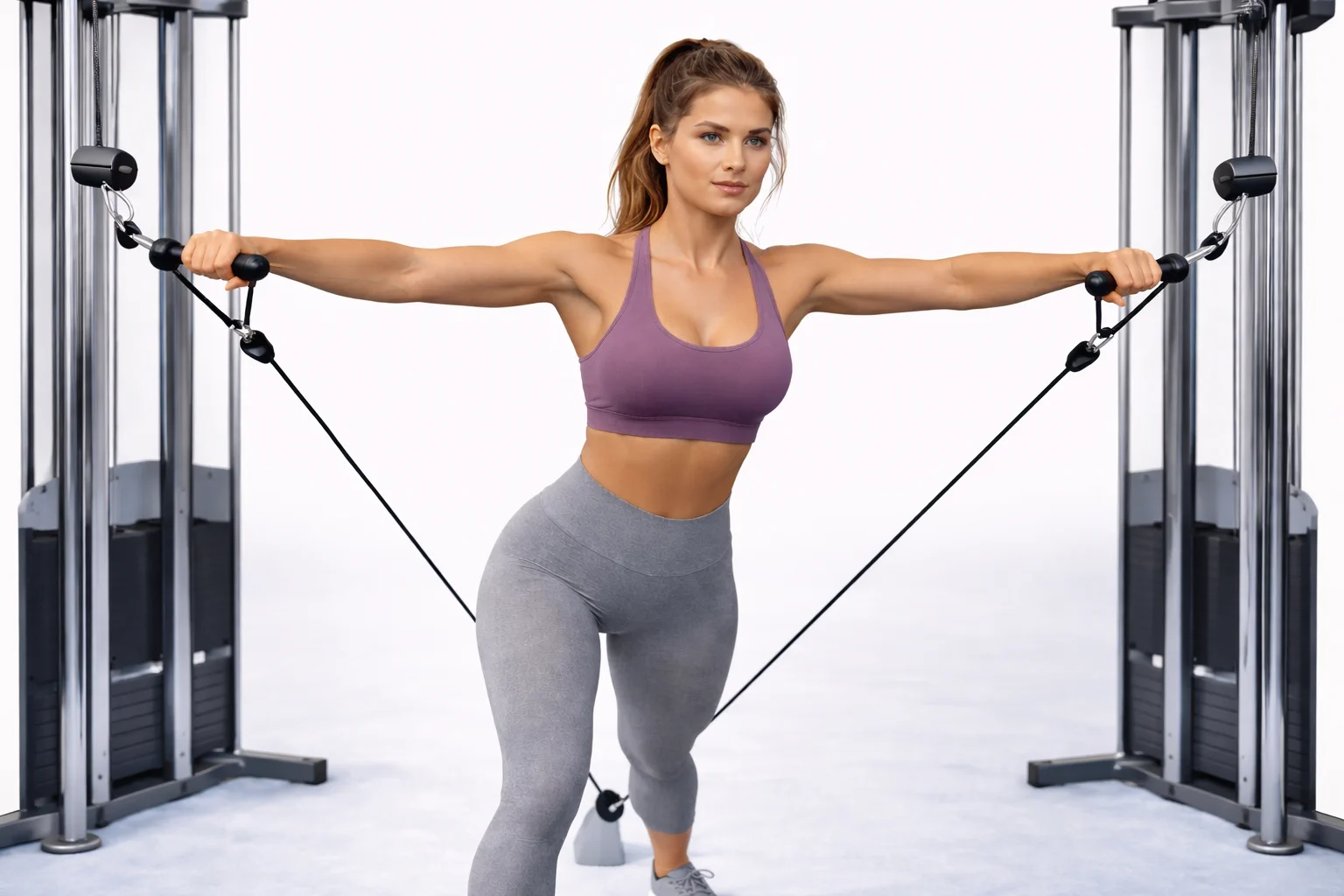
The Leaning Cable Lateral Raise is an advanced shoulder isolation exercise that adds constant tension throughout the entire range of motion. By leaning away from the cable machine, you create a unique resistance angle that maximizes medial deltoid activation while minimizing momentum and cheating. This variation is excellent for building shoulder width and developing that coveted capped deltoid appearance.
Muscles Worked
Primary Muscles
- Medial Deltoid (Middle Shoulder)
Secondary Muscles
- Anterior Deltoid (Front Shoulder)
- Supraspinatus (Rotator Cuff)
- Trapezius (Upper Back)
How to Perform
-
1
Set up a cable machine with a D-handle attachment at the lowest position. Stand sideways to the machine with your working arm closest to it.
-
2
Grab the handle with your inside hand (the one closest to the machine) and lean away from the machine by shifting your hips toward the cable stack. Your non-working arm can hold onto the machine for stability.
-
3
Keep a slight bend in your elbow and maintain this angle throughout the movement. Position your working arm slightly in front of your torso to better isolate the medial deltoid.
-
4
Raise your arm out to the side in a smooth arc until your hand reaches approximately shoulder height. Focus on leading with your elbow rather than your hand.
-
5
At the top of the movement, pause briefly while squeezing your medial deltoid. Your palm should be facing down or slightly forward.
-
6
Lower the handle back down with control, resisting the weight rather than letting it drop. Maintain the lean throughout the entire set to keep constant tension on the muscle.
-
7
Complete all reps on one side before switching to the other arm. Aim for 3-4 sets of 10-15 reps per side with controlled tempo.
Common Mistakes
-
Not Leaning Far Enough
The lean is what creates the unique resistance profile of this exercise. Standing too upright reduces tension and defeats the purpose of the cable variation.
-
Raising Too High
Going above shoulder height shifts tension to the upper traps instead of the medial deltoid. Stop at shoulder height for maximum deltoid activation.
-
Using Momentum or Swinging
Jerking or using body momentum to lift the weight reduces muscle tension and increases injury risk. Keep the movement smooth and controlled throughout.
-
Leading with the Hand Instead of Elbow
Think about lifting your elbow rather than your hand. Leading with the hand engages more arm muscles and reduces shoulder isolation.
Pro Tips
-
Focus on the Mind-Muscle Connection
Before each set, consciously think about your medial deltoid. Try to feel it working with every rep. This mental focus can significantly enhance muscle activation and growth.
-
Use Lighter Weight Than Standard Lateral Raises
The leaning position creates more resistance throughout the range of motion, so you'll need 20-30% less weight than regular lateral raises. Focus on form over ego.
-
Experiment with Hand Position
Try slightly pronating your wrist (thumb down) at the top of the movement. This can enhance medial deltoid activation, though comfort varies by individual.
-
Control the Eccentric Phase
Take 2-3 seconds to lower the weight back down. The eccentric (lowering) phase is crucial for muscle growth and provides excellent time under tension.
Variations
Try these variations to target your shoulders from different angles and keep your training fresh.
-
Standing Cable Lateral Raise
Perform without the lean for a more traditional cable lateral raise with constant tension but less intensity at the bottom position.
-
Two-Arm Leaning Cable Lateral Raise
Stand between two cable machines and perform both arms simultaneously for a more time-efficient workout and bilateral balance.
-
Seated Leaning Cable Lateral Raise
Sit on a bench positioned next to the cable machine to eliminate any leg drive and further isolate the deltoids.
-
Drop Set Leaning Cable Lateral Raise
After reaching failure, immediately reduce the weight by 25-30% and continue for more reps to fully exhaust the medial deltoid.
Alternative Exercises
If you don't have access to a cable machine or want to switch things up, these alternatives target the same muscles effectively.
-
Dumbbell Lateral Raise
The classic shoulder isolation exercise that can be performed anywhere with just a pair of dumbbells.
-
Resistance Band Lateral Raise
A portable alternative that provides similar constant tension benefits to cable exercises.
-
Machine Lateral Raise
Provides a fixed movement path and consistent resistance, ideal for beginners or when training to failure safely.
-
Single-Arm Dumbbell Lateral Raise
Allows you to focus on one shoulder at a time while using your free hand for stability, similar to the cable version.

Track Your Leaning Cable Lateral Raise Progress
Log every set, track PRs, and watch your strength grow with replogr.
Join Beta