Push Press
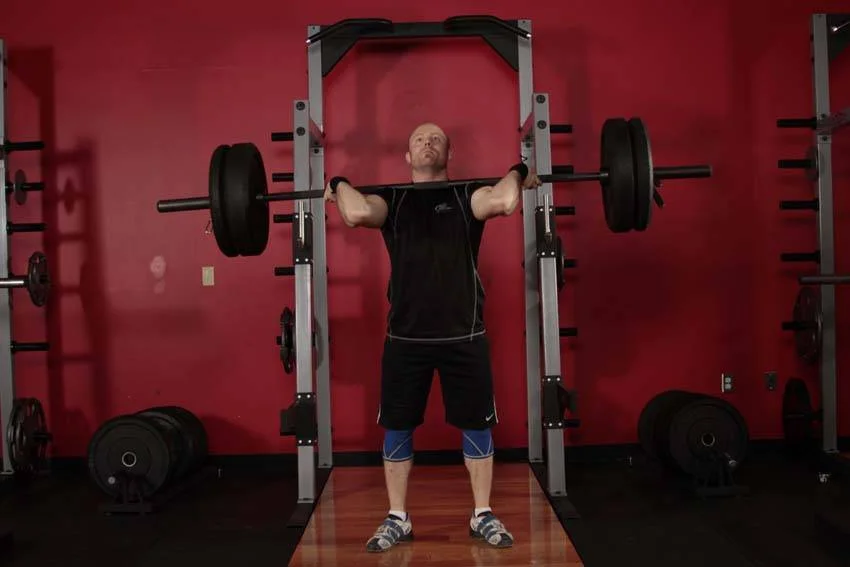
The push press uses leg drive to move more weight overhead than a strict press, building explosive power and shoulder strength. It bridges the gap between pure strength and Olympic lifting movements.
Muscles Worked
Primary Muscles
- Anterior Deltoids
- Quadriceps
Secondary Muscles
- Triceps Brachii
- Upper Trapezius
- Glutes
- Core
How to Perform
Stand with feet shoulder-width apart, holding a barbell at shoulder height.
Grip the bar slightly wider than shoulder width with elbows slightly forward.
Perform a shallow dip by bending your knees 4-6 inches while keeping torso upright.
Explosively drive through your legs, extending knees and hips powerfully.
As legs extend, press the bar overhead using the momentum from the leg drive.
Lock out the bar overhead with arms fully extended, then lower with control to shoulder height.
Common Mistakes
Dipping Too Deep
Going too low in the dip wastes energy and reduces power transfer to the bar.
Pressing Before Leg Drive
Starting the press too early misses the momentum benefit from the legs.
Leaning Back Excessively
Over-extending your back shifts this into a dangerous position and reduces power.
Not Fully Locking Out
Failing to fully extend arms at the top reduces range of motion and shoulder development.
Training Notes
Push Press is safest when the ribs stay down and the shoulder blades glide naturally. Avoid excessive arching by tightening the glutes and keeping the pelvis stacked. A neutral wrist and elbows slightly in front of the body keep the press in a strong, shoulder‑friendly line.
Use a controlled lowering phase to build stability. A 2–3 second eccentric helps the delts do the work rather than the traps. If you feel pinching, reduce range slightly and keep the elbows from drifting too far behind the body.
For hypertrophy, aim for 3–4 sets of 8–15 reps, leaving 1–2 reps in reserve. For strength, keep reps lower (5–8) and focus on crisp technique. Rest 90–150 seconds for moderate loads; longer for heavier sets.
If the traps take over, lower the load and think about “shoulders down and wide.” A slightly wider grip can reduce internal rotation stress during upright‑row type patterns. For raises, stop at shoulder height to avoid unnecessary joint strain.
Pair Push Press with a rear‑delt or external‑rotation movement to balance the shoulder. A simple combo is a press plus face pulls or rear‑delt flyes. Over time, track reps and load while keeping the same smooth tempo.
Warm up with 1–2 lighter sets and some shoulder mobility before heavy work. Small adjustments—seat height, grip width, or range—can make a big difference in comfort and deltoid activation.
A slight scapular‑plane angle (about 30° forward of the body) is usually the most shoulder‑friendly for presses and raises. If your joint feels irritated, reduce range and keep the elbows slightly forward.
For lateral raises, think “long arms and soft elbows,” and stop when the hands reach shoulder height. Heavier weights tend to shift the work to the traps, so keep the load moderate and focus on tempo.
Balance your week with at least one rear‑delt movement and some external rotation work. This keeps the shoulder joint centered and reduces the risk of impingement over time.
Progression can be as simple as adding one rep per set or one extra set at the end. Keep the technique identical, and the delts will respond without needing to chase heavy loads.
Pro Tips
Think of the dip as a 'jump' - explosive leg extension is key to generating power.
Time the press to start exactly when your legs are extending for maximum momentum transfer.
Keep your heels down during the dip to maintain balance and power position.
Use 10-20% more weight than your strict overhead press by leveraging the leg drive efficiently.
Variations
Dumbbell Push Press
Perform with dumbbells for independent arm movement and balance challenges.
Split-Stance Push Press
One foot forward for different stability demands and athletic carryover.
Behind-the-Neck Push Press
Bar starts behind head for different pressing angle and shoulder emphasis.
Alternative Exercises
Overhead Press
Strict pressing version without leg drive for pure shoulder strength.
Dumbbell Shoulder Press
Seated version isolating shoulders without lower body involvement.
Machine Shoulder Press
Guided pressing path for safe shoulder training.
Jerk
Olympic lift variation using even more leg drive and speed for maximal weight.

Track Your Push Press Progress
Log every set, track PRs, and watch your strength grow with replogr.
Join Beta