Rear Delt Fly (Cable)
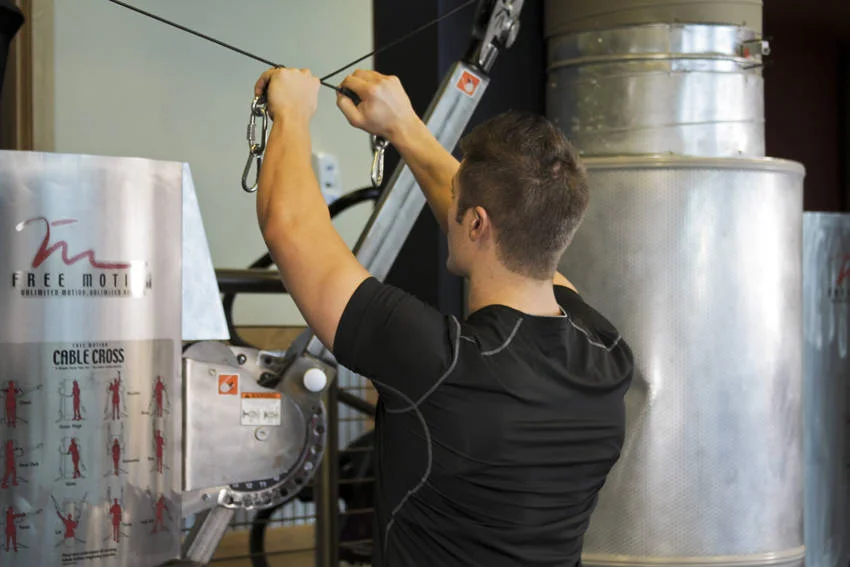
The Cable Rear Delt Fly is an exceptional isolation exercise that targets the often-neglected posterior deltoids, helping to build balanced, well-rounded shoulders. Using a cable machine provides constant tension throughout the entire range of motion, making it superior to free-weight variations for muscle engagement. This exercise is essential for improving posture, shoulder health, and creating that complete three-dimensional shoulder development.
Muscles Worked
Primary Muscles
- Posterior Deltoids
- Infraspinatus
Secondary Muscles
- Rhomboids
- Middle Trapezius
- Teres Minor
How to Perform
-
1
Set up a cable machine with the pulleys at shoulder height or slightly above. Attach single-grip handles to both sides and select an appropriate weight.
-
2
Stand in the center of the cable machine. Reach across your body and grab the left handle with your right hand and the right handle with your left hand, creating an "X" pattern with the cables.
-
3
Take a step back to create tension in the cables. Stand with feet shoulder-width apart, engage your core, and maintain a slight bend in your elbows throughout the movement.
-
4
With your arms extended in front of your chest and palms facing each other, pull the cables out to your sides in a wide arc. Focus on squeezing your shoulder blades together as you pull.
-
5
Pull until your arms are in line with your torso or slightly behind, creating a strong contraction in your rear delts. Hold this position for a brief moment to maximize muscle activation.
-
6
Slowly return to the starting position with control, maintaining tension in the cables. Don't let the weights slam down.
-
7
Repeat for the desired number of repetitions, maintaining strict form throughout. Breathe out as you pull the cables apart and inhale as you return to the starting position.
Common Mistakes
-
Using Too Much Weight
Many lifters select weights that are too heavy, forcing them to use momentum and engage other muscle groups. The rear delts are relatively small muscles that require lighter weight and strict form to properly isolate. If you find yourself swinging or using your entire body to move the weight, reduce the load immediately.
-
Bending the Elbows Too Much
Excessive elbow flexion during the movement transforms this into more of a rowing exercise, shifting emphasis away from the rear delts and onto the upper back muscles. Maintain a slight, fixed bend in your elbows throughout the entire range of motion to keep the focus on the posterior deltoids.
-
Shrugging the Shoulders
Elevating your shoulders during the pull recruits the upper trapezius instead of isolating the rear delts. Keep your shoulders depressed and focus on squeezing your shoulder blades together horizontally rather than vertically. Think about pulling your elbows back and out, not up.
-
Rushing the Eccentric Phase
Allowing the cables to snap back quickly to the starting position eliminates time under tension and reduces muscle growth stimulus. Control the negative portion of the movement for 2-3 seconds to maximize rear delt development and prevent potential shoulder injuries.
Pro Tips
-
Experiment with Cable Height
Try adjusting the cable pulley height from low to high positions to target slightly different angles of the rear delts. Setting cables lower emphasizes the lower portion of the rear delt, while higher settings recruit more upper fibers. Varying the angle over training cycles can lead to more complete development.
-
Use the Mind-Muscle Connection
Before adding weight, perform a few sets with very light resistance to establish a strong mind-muscle connection. Visualize your rear delts contracting and focus on feeling the muscle working rather than just moving weight. This neurological connection will dramatically improve your results with heavier loads.
-
Incorporate Drop Sets
Cable machines are perfect for drop sets since you can quickly adjust the weight pin. After reaching failure with your working weight, immediately reduce the load by 20-30% and continue for additional reps. This intensity technique creates exceptional metabolic stress for muscle growth.
-
Lead with Your Elbows
Think of your hands as hooks and your elbows as the primary movers. Imagine driving your elbows back and wide rather than pulling with your hands. This simple mental cue helps prevent bicep involvement and keeps maximum tension on the rear deltoids throughout the movement.
Variations
Modify the cable rear delt fly to target your muscles from different angles and keep your training progressive.
-
Single-Arm Cable Rear Delt Fly
Perform one arm at a time to address muscle imbalances and increase focus. This allows you to use your free hand for support and achieve a greater range of motion.
-
Seated Cable Rear Delt Fly
Perform the exercise seated on a bench to eliminate leg drive and core involvement, forcing stricter isolation of the rear deltoids.
-
Bent-Over Cable Rear Delt Fly
Hinge forward at the hips to approximately 45 degrees and perform the fly movement. This variation changes the resistance curve and increases the challenge to your postural muscles.
-
Rope Attachment Rear Delt Fly
Use rope attachments instead of handles for a neutral grip that some lifters find more comfortable and conducive to better rear delt activation.
Alternative Exercises
If cables aren't available or you want to diversify your rear delt training, these exercises offer similar benefits.
-
Dumbbell Rear Delt Fly
The classic free-weight version performed bent over or on an incline bench. Offers similar muscle recruitment with the added challenge of stabilizing the weights.
-
Face Pulls
A compound pulling movement using a rope attachment that targets rear delts while also engaging the upper back and external rotators for comprehensive shoulder health.
-
Reverse Pec Deck
A machine-based alternative that provides a fixed movement path, making it easier to isolate the rear delts while eliminating stabilization requirements.
-
Band Pull-Aparts
A simple but effective exercise using resistance bands that can be performed anywhere. Excellent for high-rep pump work or as a warm-up before heavier shoulder training.

Track Your Rear Delt Fly (Cable) Progress
Log every set, track PRs, and watch your strength grow with replogr.
Join Beta