Scaption Raise
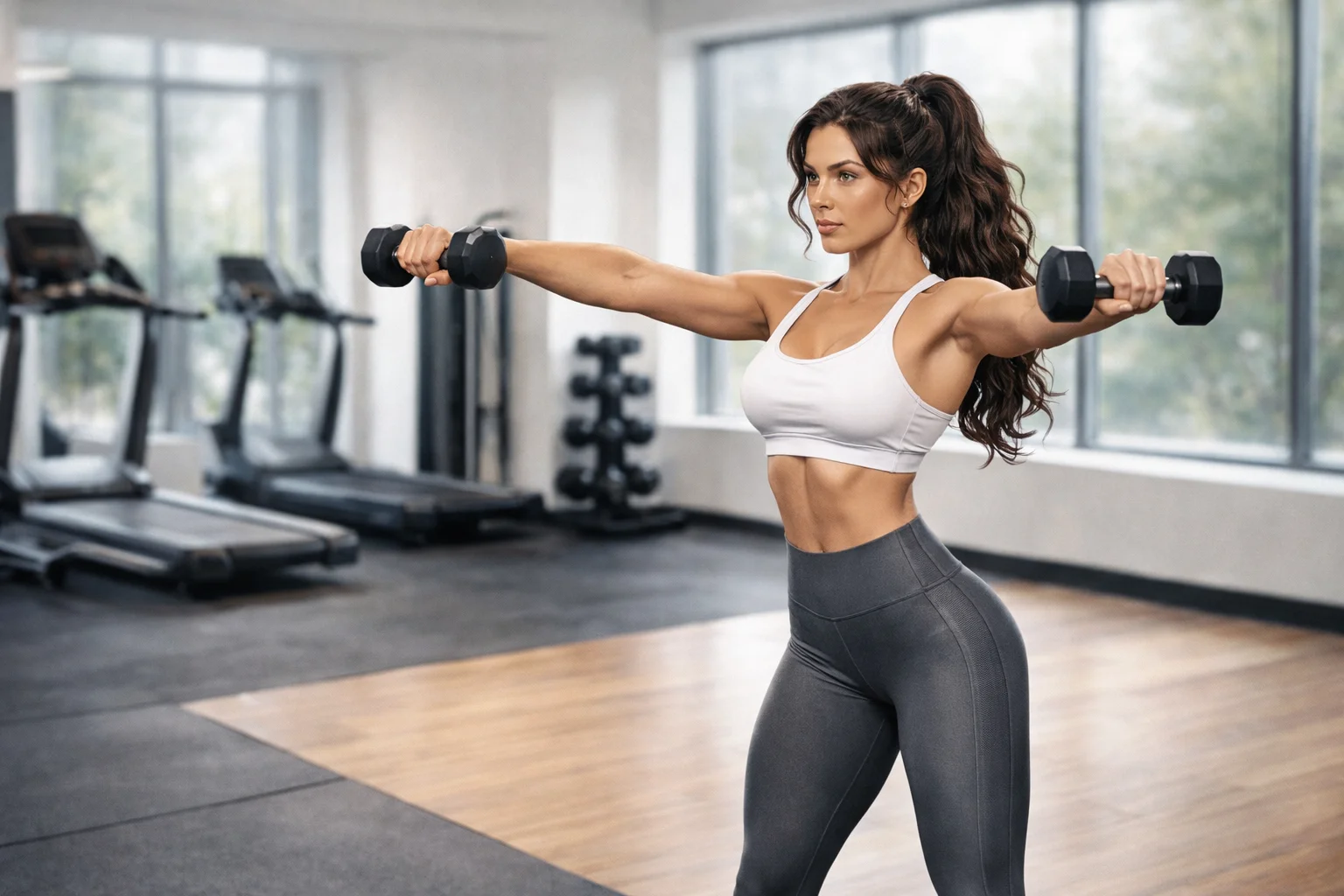
A shoulder-friendly lateral raise variation performed in the scapular plane for optimal deltoid development and rotator cuff engagement. This exercise targets the anterior and medial deltoids while minimizing impingement risk through anatomically aligned movement.
Muscles Worked
Primary Muscles
- Anterior Deltoid (Front Shoulder)
- Medial Deltoid (Middle Shoulder)
- Supraspinatus (Rotator Cuff)
Secondary Muscles
- Upper Trapezius
- Serratus Anterior
How to Perform
-
1
Stand with feet shoulder-width apart, holding dumbbells at your sides with a neutral grip. Position your arms roughly 30-45 degrees in front of your torso (in the scapular plane).
-
2
Maintain a slight bend in your elbows (10-15 degrees) throughout the movement. Engage your core and keep your chest up with shoulders back and down.
-
3
Raise both dumbbells simultaneously by lifting your arms in the scapular plane with thumbs pointing slightly upward.
-
4
Lift until your arms are parallel to the ground or slightly above shoulder height. Keep constant tension in the deltoids.
-
5
Pause briefly at the top position while squeezing your shoulder muscles.
-
6
Slowly lower the dumbbells back to the starting position with control, resisting gravity throughout the descent.
Common Mistakes
-
Using Too Much Weight
Heavy loads force you to use momentum and sacrifice form. Start light and focus on controlled movement through the full range of motion.
-
Shrugging Your Shoulders
Keep your shoulders down and back. Shrugging shifts tension from the deltoids to the trapezius, reducing exercise effectiveness.
-
Locking Out the Elbows
Maintaining a slight elbow bend throughout the movement protects your elbow joints and keeps continuous tension on the target muscles.
-
Swinging or Using Momentum
Control is key. Swinging reduces muscle engagement and increases injury risk. If you need to swing, the weight is too heavy.
Training Notes
Scaption Raise is safest when the ribs stay down and the shoulder blades glide naturally. Avoid excessive arching by tightening the glutes and keeping the pelvis stacked. A neutral wrist and elbows slightly in front of the body keep the press in a strong, shoulder‑friendly line.
Use a controlled lowering phase to build stability. A 2–3 second eccentric helps the delts do the work rather than the traps. If you feel pinching, reduce range slightly and keep the elbows from drifting too far behind the body.
For hypertrophy, aim for 3–4 sets of 8–15 reps, leaving 1–2 reps in reserve. For strength, keep reps lower (5–8) and focus on crisp technique. Rest 90–150 seconds for moderate loads; longer for heavier sets.
If the traps take over, lower the load and think about “shoulders down and wide.” A slightly wider grip can reduce internal rotation stress during upright‑row type patterns. For raises, stop at shoulder height to avoid unnecessary joint strain.
Pair Scaption Raise with a rear‑delt or external‑rotation movement to balance the shoulder. A simple combo is a press plus face pulls or rear‑delt flyes. Over time, track reps and load while keeping the same smooth tempo.
Pro Tips
-
Mind-Muscle Connection
Focus on feeling your deltoids lift the weight, not your arms. Visualize your shoulder muscles contracting and working.
-
Control the Eccentric Phase
Take 2-3 seconds to lower the weight. The negative portion builds more muscle than the lifting phase, so maximize it.
-
Start Light
The scapular plane feels different from standard lateral raises. Use lighter weights initially to master the movement pattern before progressing.
-
Breathe Properly
Exhale as you raise the dumbbells and inhale as you lower them. Proper breathing maintains core stability and power output.
Variations
Try these variations to target your shoulders from different angles and add training variety:
-
Cable Scaption Raise
Using a cable provides constant tension throughout the entire range of motion, including at the bottom position.
-
Seated Scaption Raise
Sitting eliminates leg drive and core compensation, forcing strict form and isolating the shoulders more effectively.
-
Single-Arm Scaption
Working one arm at a time helps correct imbalances and improves mind-muscle connection.
-
Resistance Band Scaption
Bands provide accommodating resistance that increases at the top where you're strongest.
Alternative Exercises
These exercises work similar muscle groups with different movement patterns:
-
Dumbbell Lateral Raise
The classic shoulder isolation exercise performed in the frontal plane.
-
Front Raise
Targets the anterior deltoid specifically with forward arm elevation.
-
Cable Lateral Raise
Provides constant tension throughout the movement with adjustable resistance.
-
Y-Raise
Another rotator cuff-friendly variation that emphasizes the supraspinatus.

Track Your Scaption Raise Progress
Log every set, track PRs, and watch your strength grow with replogr.
Join Beta