Z-Press
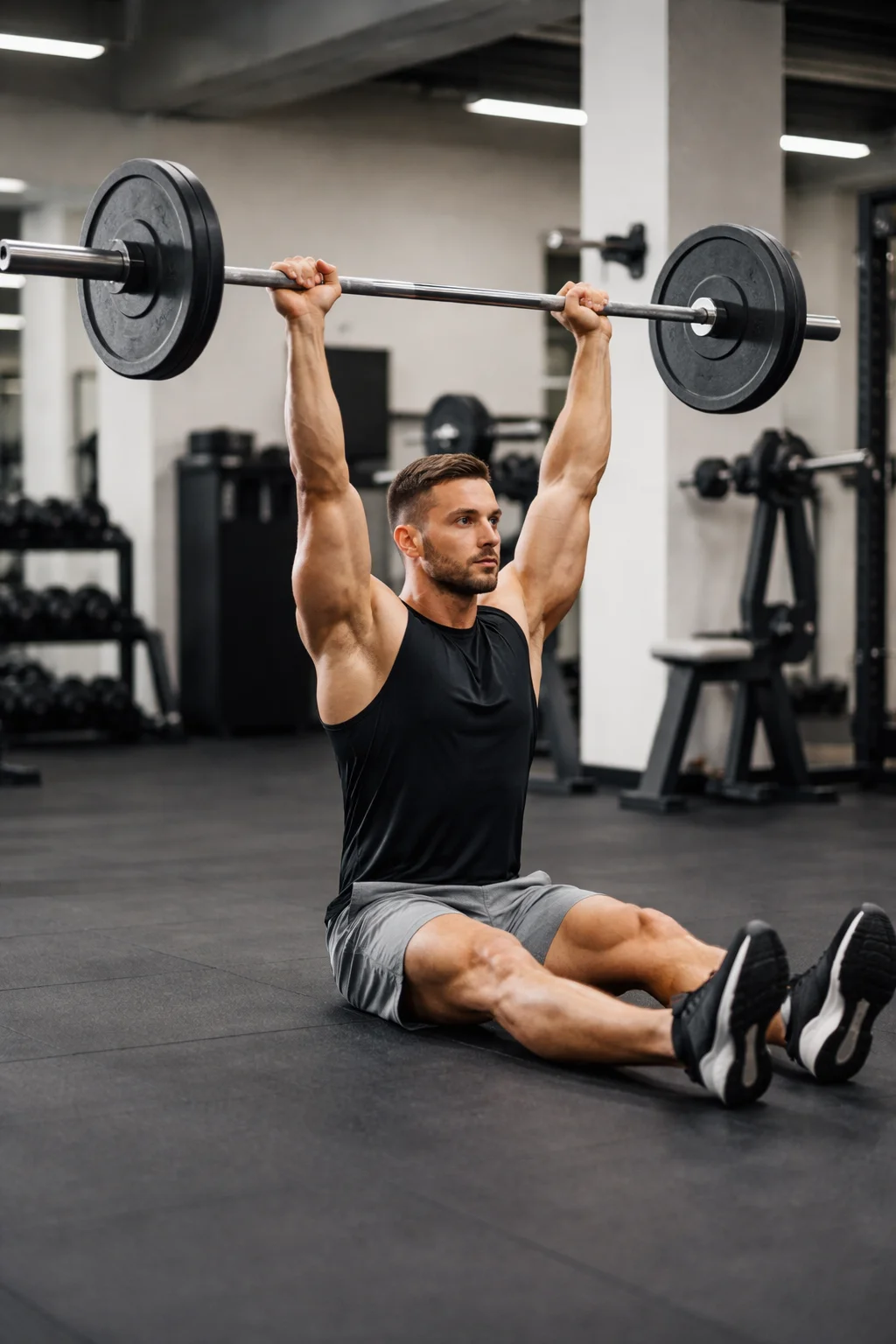
The ultimate test of strict shoulder strength - seated pressing without back support demands brutal core stability and pure overhead power.
Muscles Worked
Primary Muscles
- Anterior Deltoids (Front Delts)
- Triceps
Secondary Muscles
- Lateral Deltoids
- Upper Chest
- Core (Abs, Obliques)
- Serratus Anterior
How to Perform
-
1
Setup: Sit on floor with legs extended straight in front (or in V-position for easier balance). No back support. Load barbell or dumbbells at shoulder level. Keep torso completely upright—this is critical.
-
2
Starting Position: Barbell rests on shoulders in front rack position OR dumbbells at shoulder height. Legs straight, locked out. Core maximally braced. Upper back tight. Chest up, looking straight ahead.
-
3
Press: Drive weight straight overhead with zero leg drive or body lean. Press completely vertically—no forward or backward lean whatsoever. Extend arms fully. Fight to keep torso upright with core engagement.
-
4
Top Position: Arms locked out directly overhead. Weight stacked over shoulders. Core stays maximally tight to prevent falling backward. Maintain completely vertical torso—any lean = failed rep.
-
5
Lower: Control weight back to shoulders over 2-3 seconds. Keep torso upright throughout descent. Brace harder as weight descends. Reset position and repeat. Zero momentum or bounce between reps.
Common Mistakes
Leaning Back During Press
Any torso lean backwards defeats the entire purpose. The Z-Press is about STRICT vertical pressing. If you lean, reduce weight immediately until you can maintain perfect upright position.
Bending Knees for Assistance
Legs must stay completely straight and locked. Bending knees to generate leg drive makes it a regular seated press. Keep legs extended and eliminate all lower body contribution.
Using Too Much Weight
Your Z-Press weight will be 30-50% less than normal overhead press. This is an EGO-CHECK exercise. Start absurdly light (empty bar or 10 lb dumbbells) and build slowly.
Poor Hip/Hamstring Mobility
If you can't sit upright with legs straight, your hamstrings are too tight. Work on mobility separately or use the V-position (legs spread) as a regression until flexibility improves.
Training Notes
Z-Press is safest with ribs down and a neutral wrist.
Z-Press is safest when the ribs stay down and the shoulder blades glide naturally. Avoid excessive arching by tightening the glutes and keeping the pelvis stacked. A neutral wrist and elbows slightly in front of the body keep the press in a strong, shoulder‑friendly line.
Use a controlled lowering phase to build stability. A 2–3 second eccentric helps the delts do the work rather than the traps. If you feel pinching, reduce range slightly and keep the elbows from drifting too far behind the body.
For hypertrophy, aim for 3–4 sets of 8–15 reps, leaving 1–2 reps in reserve. For strength, keep reps lower (5–8) and focus on crisp technique. Rest 90–150 seconds for moderate loads; longer for heavier sets.
If the traps take over, lower the load and think about “shoulders down and wide.” A slightly wider grip can reduce internal rotation stress during upright‑row type patterns. For raises, stop at shoulder height to avoid unnecessary joint strain.
Pair Z-Press with a rear‑delt or external‑rotation movement to balance the shoulder. A simple combo is a press plus face pulls or rear‑delt flyes. Over time, track reps and load while keeping the same smooth tempo.
Warm up with 1–2 lighter sets and some shoulder mobility before heavy work. Small adjustments—seat height, grip width, or range—can make a big difference in comfort and deltoid activation.
Pro Tips
-
Start With Dumbbells
Dumbbells are easier to bail from safely and allow independent arm movement. Master the movement pattern with light dumbbells before progressing to barbell.
-
Use V-Position for Easier Balance
Spreading legs into a V creates a wider base and reduces hamstring flexibility demands. This is the recommended starting position for most people learning the Z-Press.
-
Brace Like Your Life Depends On It
Take a massive breath and brace abs HARD before every press. The core stabilization demand is enormous—inadequate bracing leads to falling backwards or lower back strain.
-
Perfect for Shoulder Accessory Work
Use Z-Press as accessory work with 3-5 sets of 6-10 reps. It's exceptional for building strict overhead strength that transfers to all other pressing movements.
Equipment Needed
Barbell or Dumbbells

Track Your Z-Press Progress
Log every set, track your personal records, and watch your strength grow with replogr. The offline workout tracker built for serious lifters.
Download replogr.